
A Second Drying Cycle Is the First Sign of a Blocked Dryer Vent
Cherry Hill's ranches and split-levels tend to put the washer and dryer in the basement, which means a longer run to the outside wall than a first-floor laundry closet ever needs. Here is what that run is telling you before anything alarming happens.
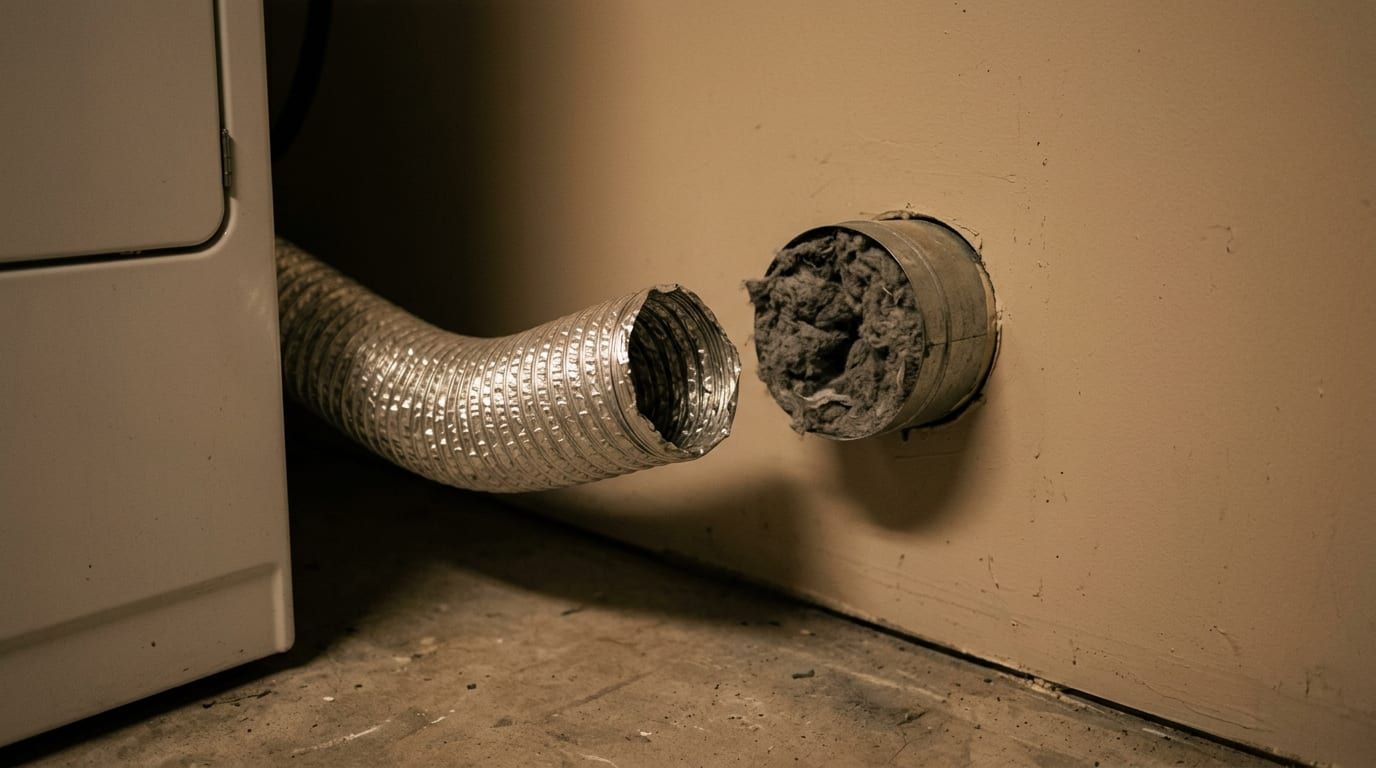
What shows up first
A blocked dryer vent rarely announces itself with smoke or a smell. It shows up first as a second cycle where one used to be enough, because the exhaust air has nowhere to go and the machine keeps recirculating heat it should have pushed outside. Next comes a laundry room that stays warm and close after a load, and a wall or cabinet behind the dryer that feels warmer than it should. After that, clothes start coming out of the dryer hot to the touch but not actually dry. The sign that is easiest to check yourself, and usually the last one people think to look for, is weak or absent airflow at the exterior cap while a load is running. Any one of these on its own is worth a look. Two or three together mean the run itself is restricted, not that the appliance is getting old.
Why a basement run narrows faster than a closet install
Most of Cherry Hill Township's housing dates from the 1950s through the 1970s, the ranches and split-levels built out across the old Delaware Township farmland before the 1961 renaming. A lot of that stock has its laundry hookup down in the basement, so the duct starts below grade and has to find its own way sideways under the joists before it ever reaches a rim joist or an exterior wall - picking up one or two elbows a ground-floor laundry closet would never need. Every elbow is a place lint settles preferentially, because the air slows and turns rather than running straight through, and a run with more turns in it reaches a genuinely restricted state on less lint than a short, straight one would.
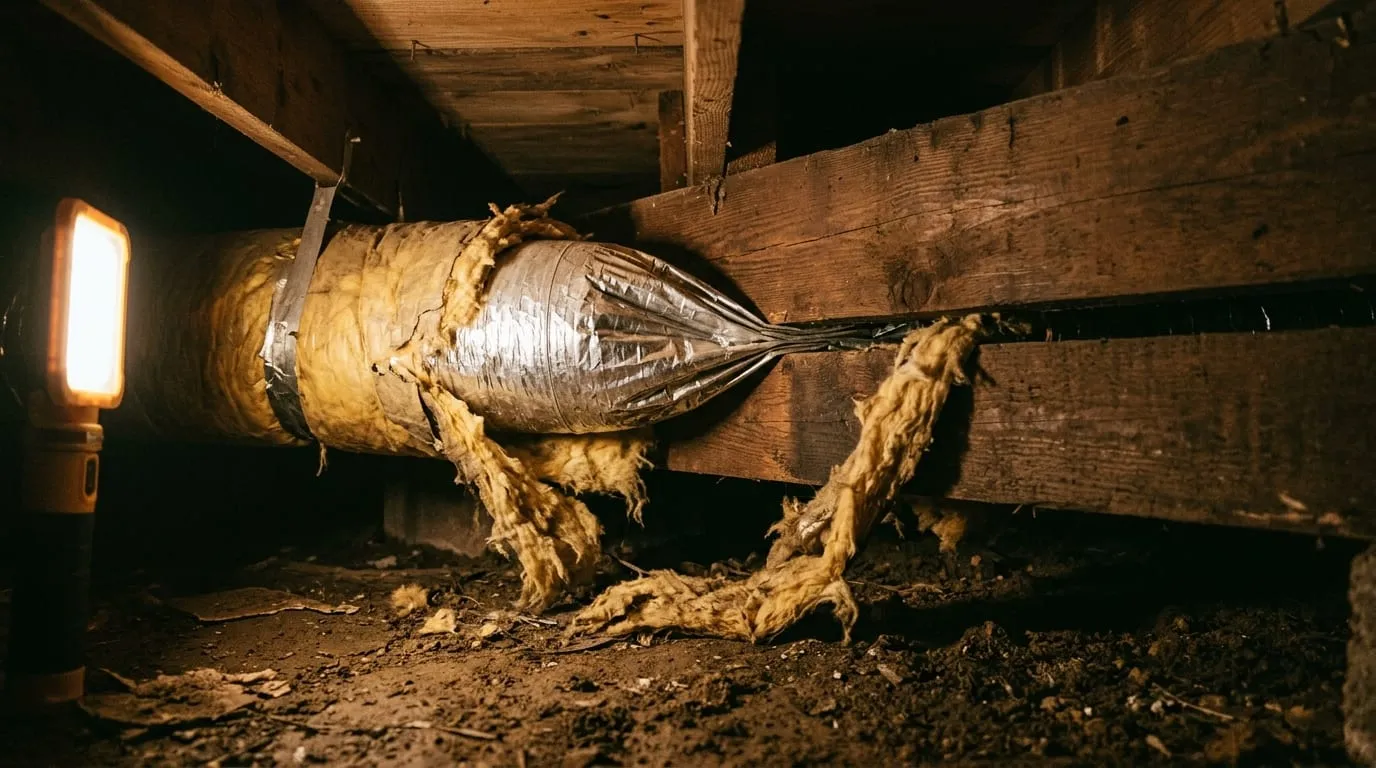
The order the symptoms actually arrive in
Longer drying time comes first, and it is the sign people work around rather than question: a permanent-press load that used to finish in one cycle starts needing a second, and a household adjusts without asking why. Heat is next. Rest a hand on top of the machine partway through a cycle, then on the wall directly behind it - a normal run stays merely warm, while a restricted one runs noticeably hotter, because the heat that should be leaving with the exhaust air is staying in the cabinet instead. Static cling tends to get worse around the same time. Some machines will eventually trip their own thermal safety switch and end a cycle early rather than let the drum keep heating against blocked exhaust. A scorched smell is a late sign, not an early one.
What to look for at the outside cap
The exterior hood is the one part of the system most people never actually look at, mostly because it sits above eye level on the side or back of the house. Its flap should swing open only while the dryer runs and drop shut within seconds once the cycle ends. On a restricted run, lint packed at the opening can prop that flap ajar all the time, and from the ground you may see grey fibre feathering around the edge of the cover. The more useful check needs no ladder: start a load, then hold a hand a few inches from the cap outside. A steady stream of warm air is normal. A faint puff, or nothing at all, means the air is finding a shorter path back into the room instead of out to the yard.
Why the reachable few feet are not the whole run
A vacuum nozzle worked in behind the machine reaches the first arm's length of duct and nothing past it, which is exactly the stretch least likely to be the problem. Lint that clears the trap keeps moving until the airflow slows down, at a bend, a low sag between joists, or the hood itself. Opening a run that has never been opened usually turns up the bulk of the buildup sitting well past where a household vacuum can reach from the laundry room. That is the difference between clearing the end of a run and clearing the run: the first makes the next load feel better for a week, the second gets air moving at its designed rate again, the whole distance from the drum to the outside wall.
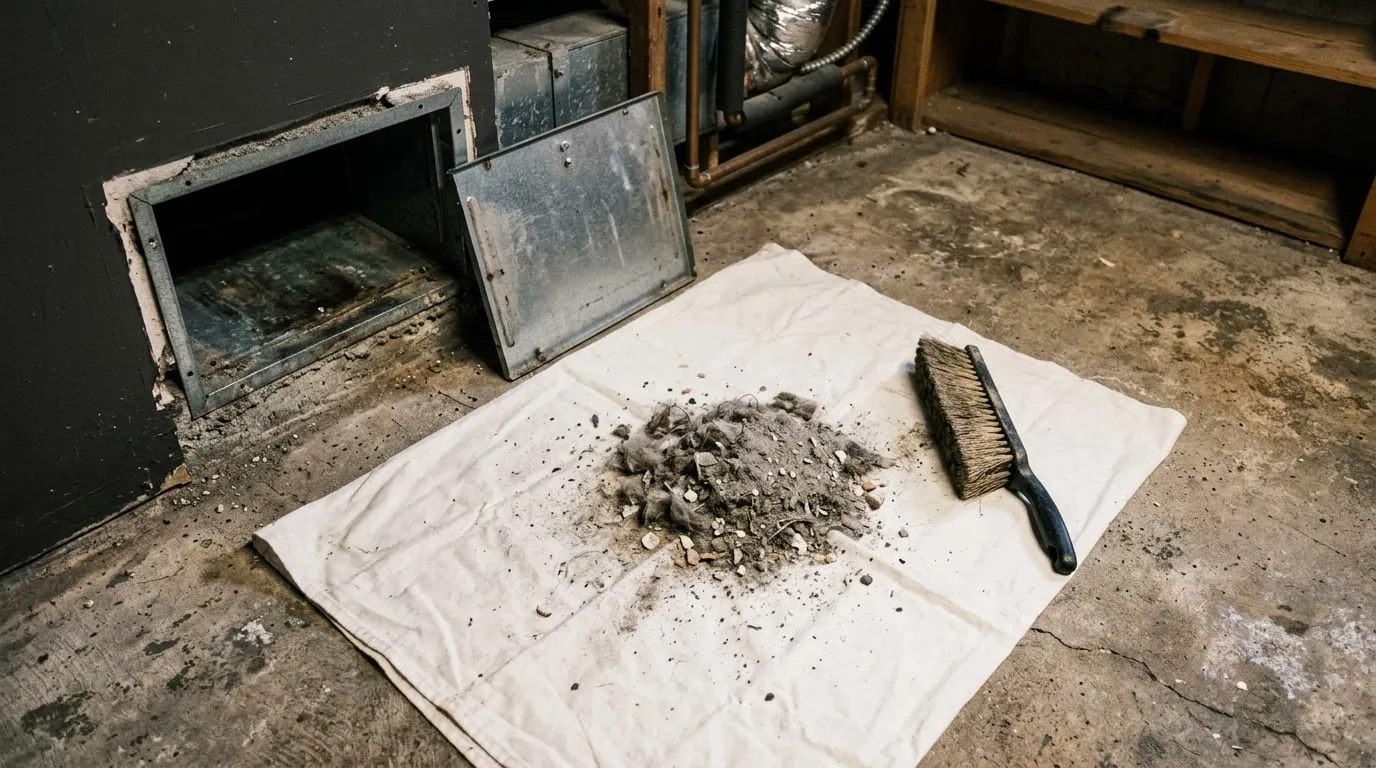
The length limit behind the recommendation
The building code that governs dryer exhaust sets a maximum developed length of 35 feet for the duct run, and it does not treat every foot of that run the same way: Table M1502.4.6.1 deducts 5 feet from the allowance for every 90-degree elbow and 2.5 feet for every 45-degree elbow the run contains, so a basement route with two or three turns can use up most of that allowance before it ever reaches 35 straight feet of pipe. In Cherry Hill's condominium and townhouse stock specifically, roughly one home in twelve here, the duct commonly runs through a shared chase and turns more than once before it reaches open air, rather than exiting straight through a rim joist the way a single-family ranch's usually does. A run already close to that limit needs far less lint to turn a marginal run into a restricted one.
Questions about a slow-drying dryer
A load now takes two cycles instead of one - is that really the vent?
It is the most common early sign. A properly vented dryer moves a large volume of hot, moist air outside every few minutes; once that path narrows, the same heat has nowhere to go but back into the drum, so the machine runs longer to finish the load. Feel for airflow at the outside cap before assuming the appliance itself is the problem.
The lint trap looks clean every time. How can the vent still be full?
The trap only catches lint moving in a straight line past a fine screen, and a fair amount slips past it on every load regardless of how often you clean it. What gets past the trap travels until the airflow slows, at an elbow, a low sag between joists, or the hood itself - none of which the trap touches.
Will running a shop vacuum in behind the dryer clear it?
It clears whatever sits in the first few feet, which helps but is rarely where a long basement run actually narrows. A duct that bends twice before it reaches an outside wall usually has its worst buildup well past the point a vacuum hose can reach from the laundry room side.
Does the length of the run actually matter, or is it just about lint?
Both. Code sets a maximum developed length for a dryer duct and reduces that allowance for every elbow the run contains, so a basement duct that already turns once or twice was built with less margin than a short, straight run. Less lint narrows it meaningfully sooner.
How do I know if this is worth a visit rather than something I can check myself?
Check two things first: whether a load now regularly needs a second cycle, and whether you feel steady airflow at the outside cap while the dryer runs. If either one is off, describe that on the phone and we will tell you plainly whether it is a short visit to clear the run or something else with the appliance.
Tell us what the dryer is actually doing
None of this tells you what your own duct looks like at the bend you can't see. Call (856) 606-0212 and describe the cycle count, the heat in the laundry room and whether the outside cap is still moving air, and we will tell you plainly whether that is worth a visit.
The service this points to
Dryer vent cleaning
Clearing the full duct from the back of the dryer to the cap outside, past the reach of a vacuum hose in the laundry room.
See the serviceAir duct cleaning
A different duct doing a different job, and often worth booking on the same visit while the equipment is already out.
See the serviceMore from the advice pages
- When air duct cleaning is worth it
- Telling the three stages of chimney creosote apart
- How often a chimney actually needs sweeping
- Level 1 or level 2: which chimney inspection you need
- What an oil-to-gas conversion does to an oversized flue
- What a hundred winters do to a chimney crown
- Which flue is yours in a two-family house