Oil to Gas and the Oversized Flue
Cherry Hill Township has converted the overwhelming majority of its houses from oil or coal to gas heat, and each of those swaps left a brick chimney standing that was built decades earlier for a much larger fire. Here is what that leftover flue space does to the masonry, and the point at which it actually needs a new liner.
The short answer
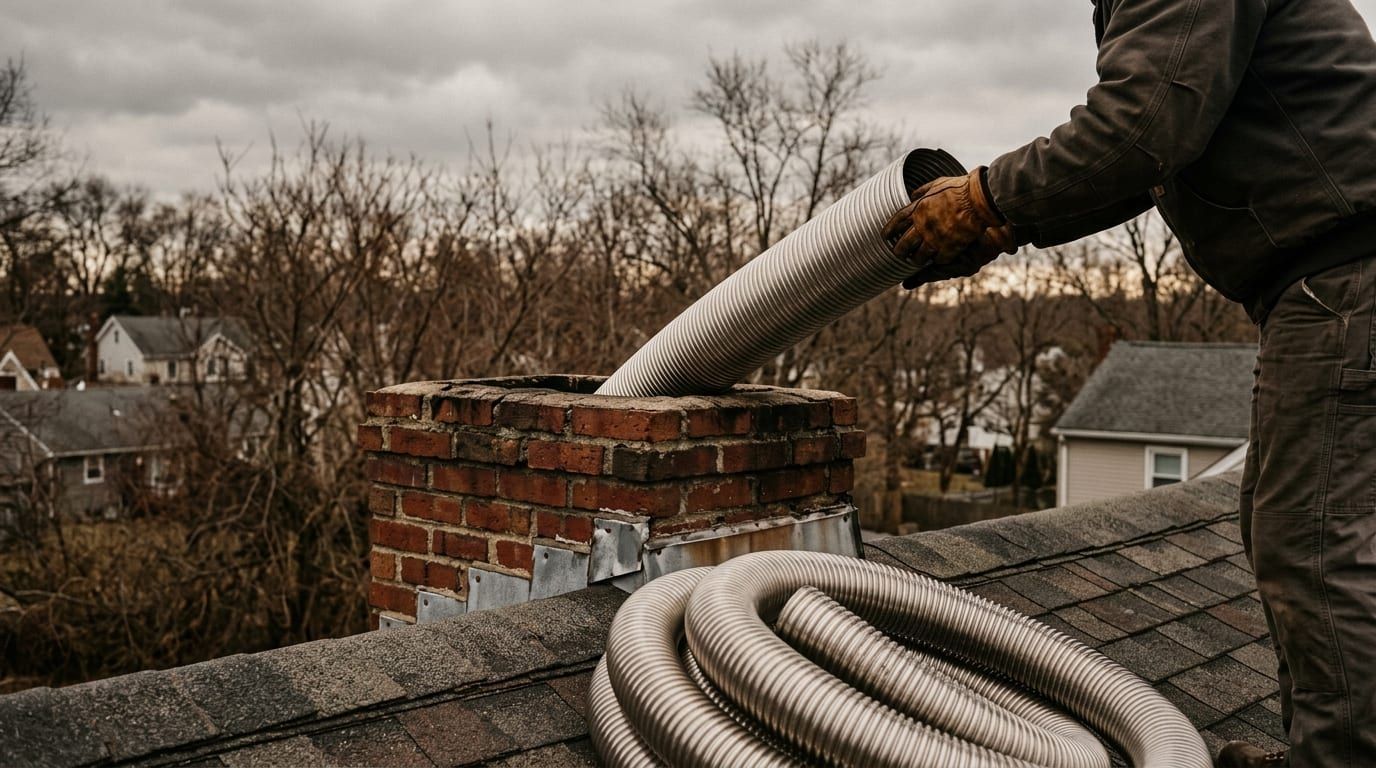
Swap an oil-fired furnace for a gas one and the new appliance burns at a fraction of the heat and exhaust volume the old equipment produced — but nobody resizes the chimney to match. Left with more cold masonry than its thin exhaust stream can ever warm, that flue cools the rising gas below its dew point before the fumes clear the cap, and the moisture that condenses out along the way is mildly corrosive. Winter after winter, it works on the mortar and the clay lining from inside a passage nobody is watching. The fix isn’t a bigger appliance or a smaller chimney — it’s a liner sized to the equipment that’s actually connected to it now.
Cherry Hill already made this switch, mostly
Census figures put 23,961 of Cherry Hill Township’s occupied homes — 81.3 percent — on utility gas, against 617 households, or 2.1 percent, still burning fuel oil. The township finished most of its build-out between 1950 and 1980, back when oil and coal were unremarkable choices for a new furnace, and the masonry chimneys poured for that generation of houses were sized to match whichever fuel they got. Nothing about those remaining 617 oil systems is different: the day any one of them is finally replaced with a gas unit, the new appliance moves into a flue proportioned for a fire several times its size.
- Gas combustion produces a fraction of the heat and exhaust volume that the coal or oil-fired equipment those chimneys were originally built around once produced.
- A furnace or boiler is typically replaced first. A standalone water heater is often left behind, venting alone into a chimney it was never meant to fill by itself.
- Swapping the appliance changes nothing about the brick and clay already built into the wall — only what is now pushing exhaust through them.
Why cold masonry beats a small gas flame
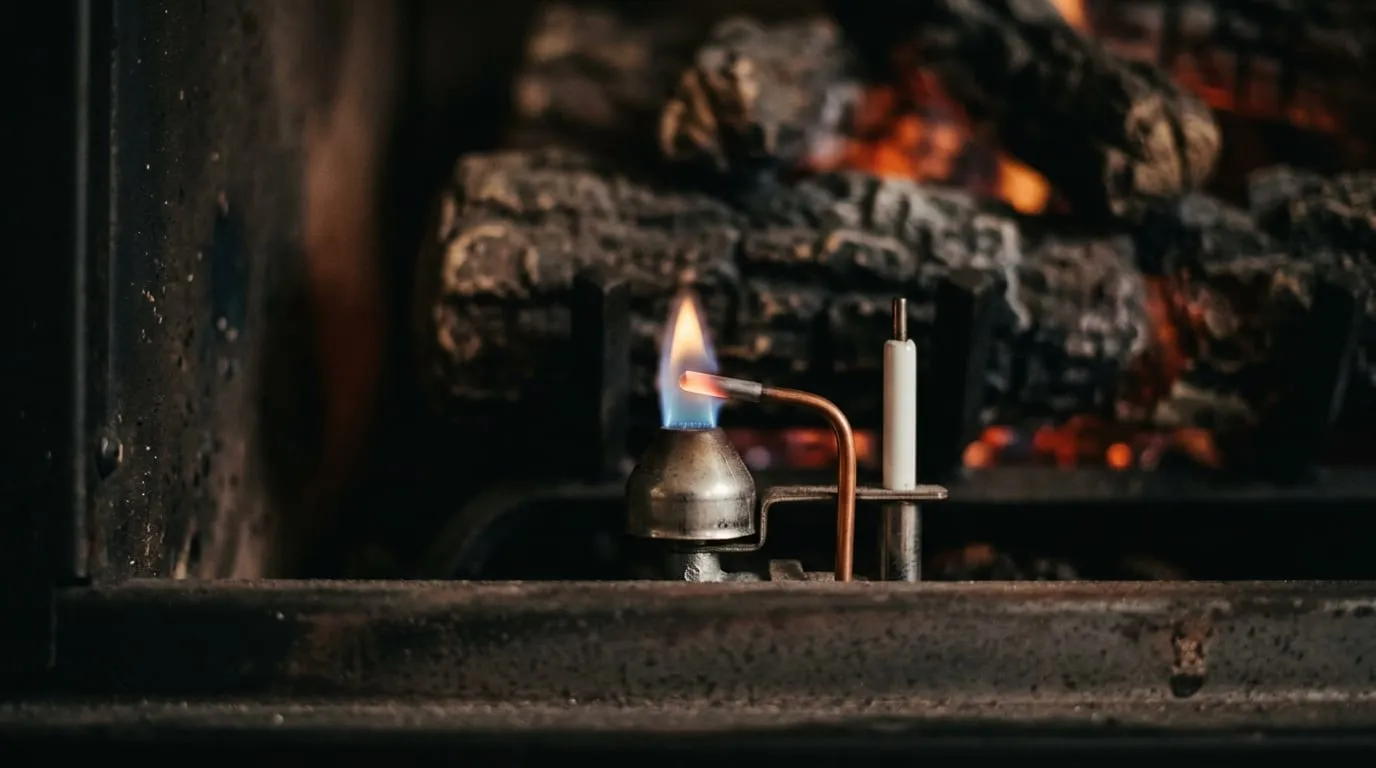
Exhaust only clears a chimney while it stays hot enough and moves fast enough to reach the cap before it cools. Ask a small, lukewarm column of gas exhaust to climb a shaft built around a coal or oil-fired furnace, and it loses that race — there’s simply too much cold brick and tile lining the way for a gas-sized fire to warm. Pennsauken Township, a few miles north, shows the pattern at scale: three-quarters of its homes are on gas now against 4.3 percent still on oil, and the recurring finding there is a gas water heater venting alone into a flue a coal-fired boiler once filled, leaving condensate running down the tile with every heating cycle.
What shows up before anyone runs a camera down the flue
Nobody needs a camera to catch the early warnings — most of them show up outside the flue years before an inspection ever gets scheduled. Watch for:
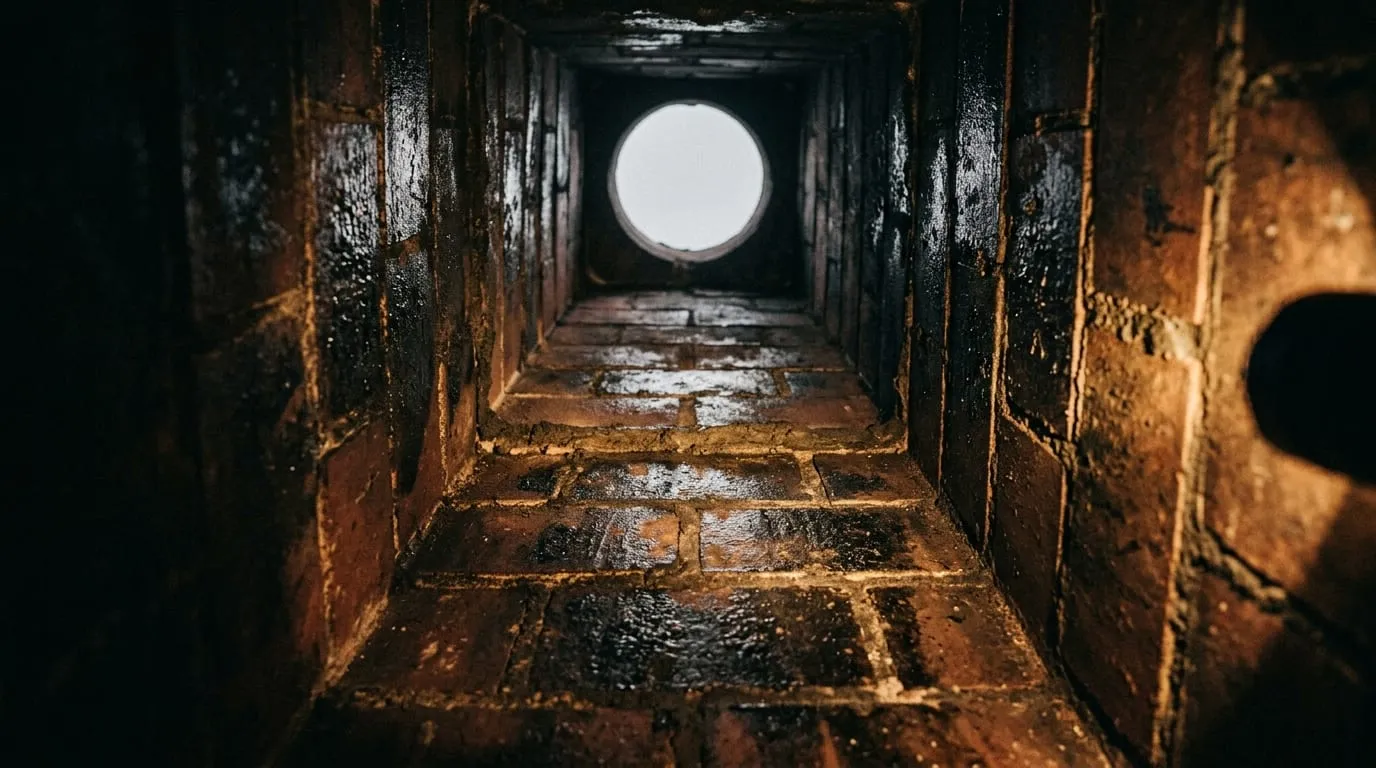
- A pale, chalky bloom on the brick beneath the flue, left behind when dissolved minerals dried on the surface after riding the moisture out of the wall.
- Mortar joints or brick faces starting to flake, usually worse on whichever side of the stack catches the wind and rain.
- A ceiling or wall stain that a roofer inspects and rules out, because the water was never coming from the roof.
- A furnace or water heater that hesitates to light, or that cycles on and off more than it used to.
- A faint burnt smell drifting from the basement appliance on calm or humid days.
The paperwork Cherry Hill actually expects
Cherry Hill issues its own construction permits through its own Department of Code Enforcement and Inspections rather than through Camden County, and an oil-to-gas swap here runs through more than one of them. Pulling the old oil tank needs a permit of its own. Installing the new gas furnace, boiler or water heater is a separate one. On top of both sits New Jersey’s statewide Form F370, the chimney verification required on any fuel-fired equipment replacement, where the installer — not the homeowner — has to certify in writing that the chimney fits the appliance now connected to it. N.J.A.C. 5:23-2.20(d) puts that signature squarely on whoever did the mechanical work; a homeowner filling it out themselves does not satisfy the requirement, regardless of who ran the gas line.
Whether the flue needs relining this year
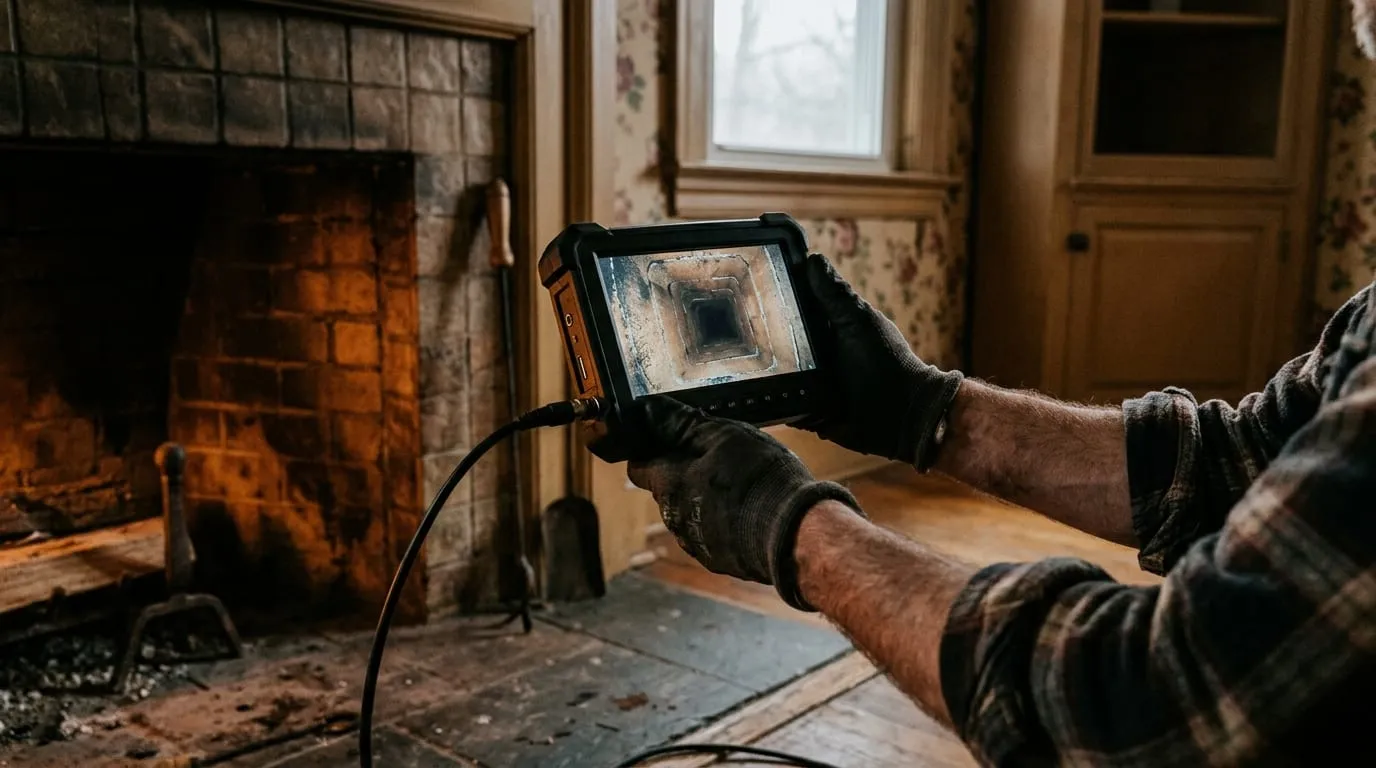
Not every conversion ends in a new liner — what a camera finds inside the flue decides that, separate from why the inspection got triggered in the first place. Tight joints, intact tile and an appliance drafting cleanly can wait for next season’s look, photographed and logged for comparison. Open mortar joints, missing sections or bare unlined masonry point the other way, and stalling only gives the condensate more time to spread before the liner goes in regardless. New Jersey’s Uniform Construction Code adopts the 2024 IRC at N.J.A.C. 5:23-3.21, which calls for a chimney lined with material matched to whatever is actually burning below it — on an oil-to-gas job, that generally means a continuous stainless liner sized to the new appliance’s own vent connector and run the full height of the flue, rather than left to fill the old shaft on its own.
Questions about oil-to-gas conversions and flue sizing
Is a new chimney liner mandatory after every oil-to-gas conversion in New Jersey?
Not automatically. New Jersey requires an F370 chimney verification on any fuel-fired equipment swap, but that inspection only calls for a new liner when it finds a flue that genuinely can’t handle the new appliance — unlined masonry, gaps in the mortar, or a shaft that is clearly oversized. A chimney that checks out with sound tile can be verified and signed off without being touched.
Who is actually allowed to sign the F370 form?
The contractor who installs the new gas equipment, not the person who owns the house. New Jersey’s code assigns that certification to the installer under N.J.A.C. 5:23-2.20(d), so even a homeowner-installed water heater still needs a licensed professional to inspect the chimney before the permit can close.
Does this only affect older houses in Cherry Hill?
No. Cherry Hill’s housing stock runs mostly 1950 through the 1980s — colonials, ranches and split-levels rather than pre-war construction — and the mismatch shows up regardless of a house’s age the moment its furnace or water heater changes fuel. The remaining 617 oil-heated homes in the township, plus similar pockets in nearby Pennsauken, Collingswood and Haddonfield, are all candidates the day their equipment gets replaced.
What actually happens if the liner gets skipped?
The condensate has nowhere else to go, so it keeps breaking down mortar and tile from inside the flue for as long as the mismatch continues. Eventually it announces itself from the outside — a mineral bloom or crumbling brick on the stack, a ceiling stain with no roof leak behind it, or a draft that has grown noticeably weaker — and the repair by then is almost always bigger than the liner would have cost up front.
How do I find out if my own chimney has this problem?
The only reliable way is a camera pass down the full length of the flue — nothing about the tile’s actual condition is visible from either end. Tell us what changed with the appliance and roughly when, and we’ll give you a straight read on whether that’s worth scheduling now.
Get the new appliance signed off right
Whether the appliance that changed sits in Cherry Hill, Pennsauken, Collingswood or Haddonfield, a chimney that used to vent oil or coal deserves an actual look before it is trusted with gas. We will scope the flue with a camera, walk you through exactly what it is carrying, and take care of the F370 paperwork the swap requires.
If the chimney itself is the open question
Chimney Repair
Liner replacements, crown rebuilds and flashing repairs — the masonry work that follows years of condensate or freeze-thaw damage.
See the serviceChimney Inspection
The camera-based Level 1 and Level 2 inspections that back up an F370 chimney verification or any change of heating fuel.
See the service