
What a Hundred Winters Do to a Chimney Crown in Camden County
Water finds a hairline in a chimney crown, then finds it again every time the temperature swings back across freezing. Camden County crosses that line fewer times a winter than the hills sixty miles northwest — the numbers below explain why that still is not nothing.
The short answer
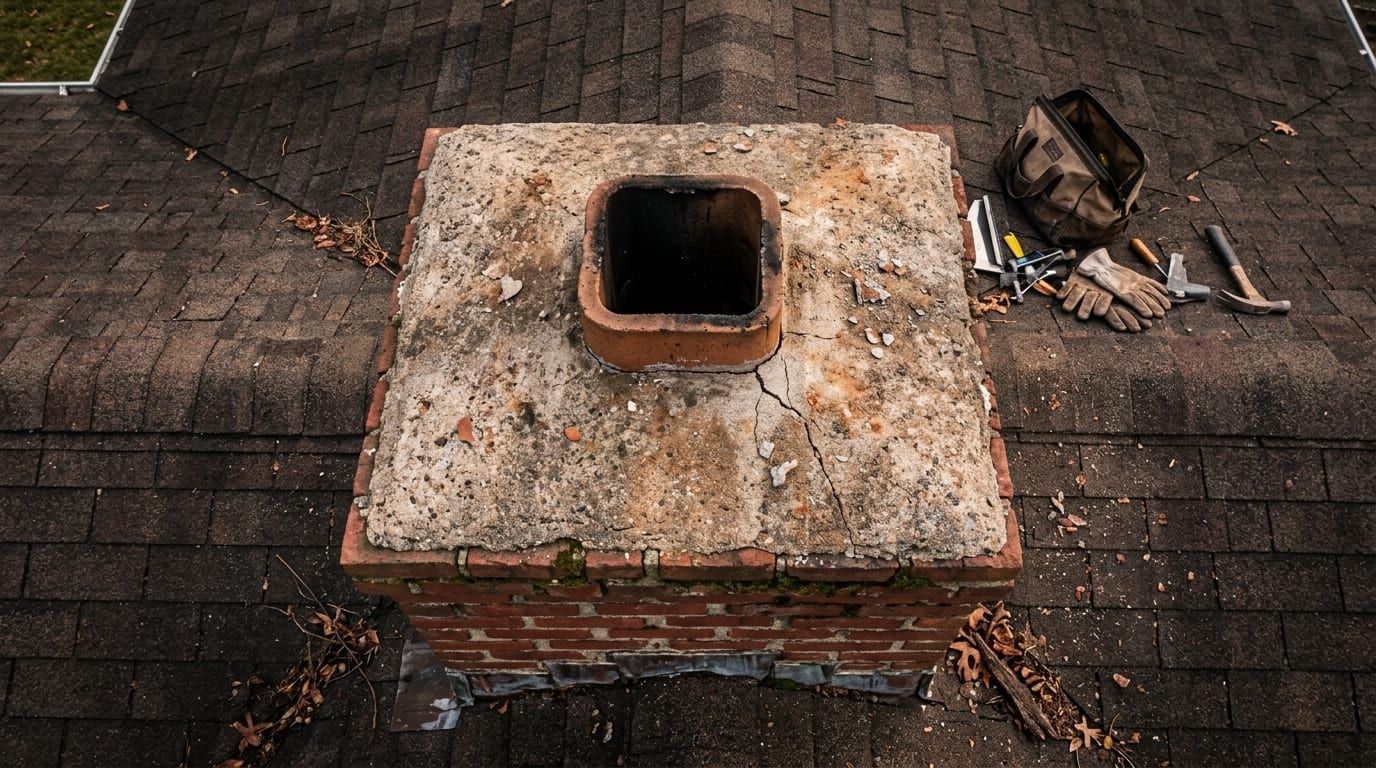
Freeze-thaw is the mechanism, and it works the same way everywhere — it is the frequency that changes by location. Water sits in a hairline crack in a chimney crown, and every time the temperature crosses back over thirty-two degrees, it freezes, expands by roughly nine percent, and pries the crack open a fraction more than it was before. Camden County sits on the Coastal Plain, the same climate band as Philadelphia just across the river, where a 1987 study of freeze-thaw days across the northeastern United States counted fewer than fifty of those crossings in a typical winter. The hill country roughly sixty miles northwest — inside the same eleven counties this business also serves — runs closer to a hundred, measured at NOAA's Flemington weather station. Fewer crossings a year is a real advantage. It does not make a hundred-winter-old crown immune to the ones it still gets.
Ice Does Not Care How Old the Crack Is
Ordinary water does something unusual when it turns to ice: it takes up about nine percent more room than it did as a liquid. A chimney crown does not need a wide crack to feel that — a hairline is enough. Rain or meltwater works into a shrinkage crack that has probably been there since the concrete cured, sits through a cold snap, and expands the moment the temperature drops below thirty-two degrees. The crack does not close back to its original width once the ice melts; it settles a fraction wider, because the concrete on either side was pushed rather than stretched. Do that across a whole winter of nights that drop below freezing and days that climb back above it, and the crack has a shape by spring. Do it across a hundred winters, and the crown has usually stopped being one continuous slab at all — it has become several pieces the mortar is quietly holding in roughly the same place.
A Crown Is a Slab, Not a Seal
The crown is the poured or trowelled cap sitting on top of the whole chimney — brick, flue tile and all — and its one job is to keep water from getting down into any of it. That is a lot to ask of a slab rarely more than a couple of inches thick, finished by hand on a roof. Small shrinkage cracks are normal the day it is poured; a crown fails because nobody gave that first crack anywhere else to go. Left alone, a hairline runs toward the flue tile, widens a little every freeze, and eventually opens a path down the outside of the tile into the chimney's interior — a different, more expensive kind of leak than water sitting on top of a slab. By the time a stain shows up on a ceiling near the chimney chase, the crown has usually been doing this for more than one winter.
A Cap Keeps Out Rain. It Does Not Rebuild a Crown.
A rain cap and a crown are not the same repair, and treating them as interchangeable is a common reason a fix does not hold. The cap keeps bulk rain, snowmelt, birds and animals out of the open flue; the crown sheds water off the masonry deck underneath the cap. A missing or rusted-through cap dumps far more water onto a crown than the crown was built to handle alone, which is exactly what turns a small hairline into a wide one in a single bad winter. Replacing a cap without looking at the crown underneath it fixes half the problem — the flue stays dry, and the crown keeps cracking anyway, from water that was already getting in before the cap ever failed.
Where the Water Goes Once the Crown Lets It Through
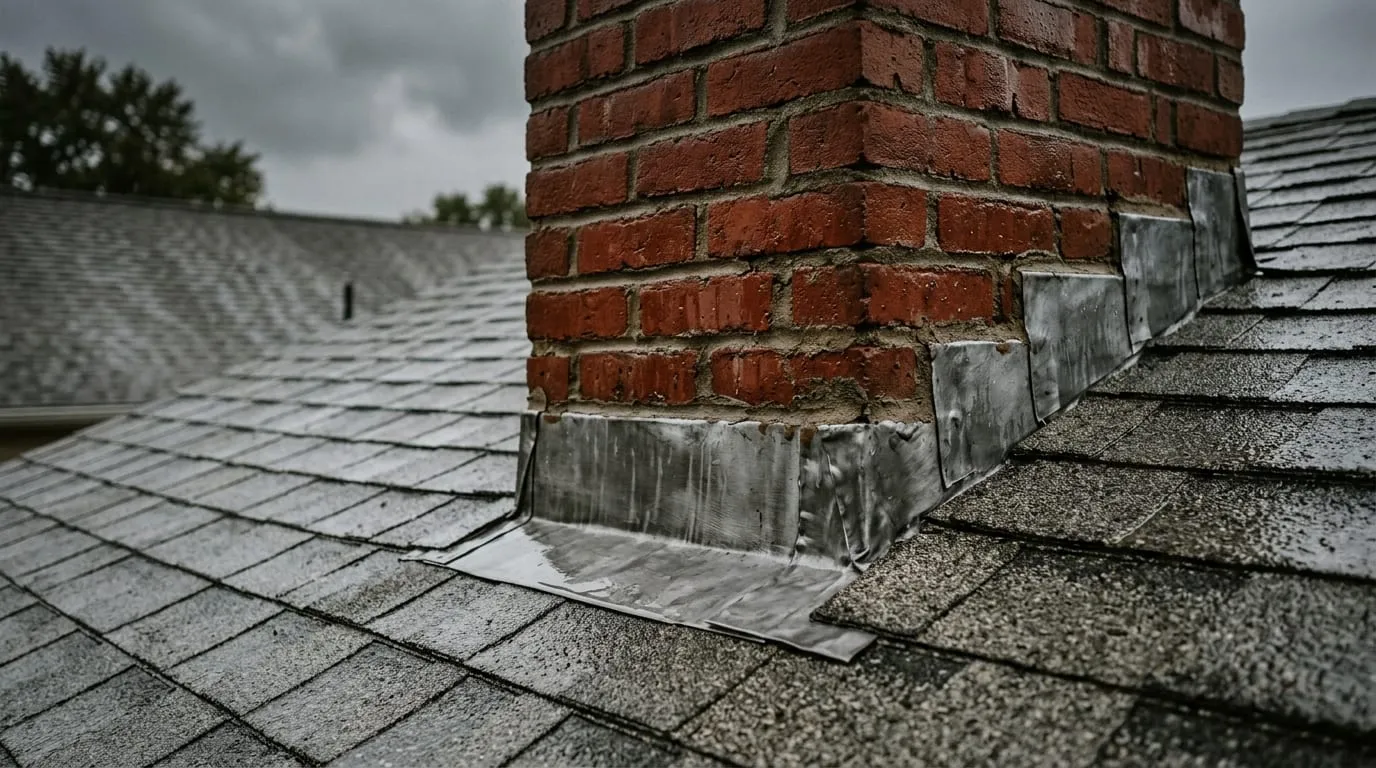
Water that gets past a cracked crown does not stay at the top of the chimney. It runs down the outside of the masonry, and the first barrier built to stop it is the flashing — the metal woven into the roofing where the chimney passes through it. Flashing sheds water running down a roof, not water running down the face of a chimney above the roofline, so a failing crown puts more moisture at that joint than the flashing was meant to carry. That is why so many roof leaks that show up as a ceiling stain near a chimney chase turn out, on inspection, to have started at the crown rather than in the shingles. Chasing the stain to the flashing alone, without asking what put the extra water there, is a repair that gets redone the following winter.
Fewer Cycles a Year, Still a Hundred Winters
New Jersey does not freeze and thaw the same amount everywhere in it. Camden County sits on the Coastal Plain, the same climate band the National Weather Service uses for Philadelphia just across the river, and a 1987 study of freeze-thaw days across the northeastern United States put that area at fewer than fifty crossings in a typical winter — nights that dip below thirty-two degrees and days that climb back above it. The same study measured more than ninety a year at the higher elevations of northern New Jersey, and this business's own research for the Hunterdon County hills we also serve puts one record, NOAA's FLEMINGTON 5 NNW station, at roughly a hundred and three. Say the Camden County number out loud and it sounds reassuring — fewer freezes. It is not the whole answer. Cherry Hill Township's own housing was mostly built between 1950 and 1980; in Haddonfield, just over half the housing predates 1940. A crown poured in 1958 has now stood through roughly seventy winters at the lower Coastal Plain rate. Fewer cycles a year is real. It is not the same as none.
Crown and freeze-thaw questions we hear on the phone
How can I tell if freeze-thaw has already cracked my chimney crown?
Look for map-like hairlines radiating out from the flue tile, a rough or flaking surface instead of a smooth pour, and dark, saturated patches that stay wet longer than the rest after a hard freeze. Binoculars from the ground usually show enough to know whether it is worth a closer look.
Does adding a chimney cap fix crown damage?
No. A cap keeps rain, snow and animals out of the open flue; it does not resurface or seal the crown underneath it. The two are usually addressed on the same visit, but replacing one does not repair the other.
How often should a crown be checked in Camden County?
NFPA 211 calls for chimneys, fireplaces and connectors to be inspected at least once a year, regardless of use. A crown already showing map-cracking is worth a second look after any winter with several sub-freezing nights in a row.
If Camden County gets fewer freeze-thaw cycles, why do older houses here still get crown damage?
Because fewer cycles is not zero. A crown poured decades ago has gone through every one of those winters anyway, and Camden County has plenty of older stock — Haddonfield's housing is just over half pre-1940. The lower yearly count slows the clock; it does not stop it.
What actually keeps a repaired crown from cracking again?
A drip edge — a groove or overhang cast into the new pour so water drips clear of the brick instead of running down its face — plus a sealant bond break around the flue tile. IRC section R1003.9.1 requires both on new work; a repair without them tends to restart the same crack within a few winters.
Not sure if that crack is weather or worry?
A hairline in a photo can mean two things depending on how deep it runs, and a phone call is the fastest way to find out which one you have. We will not tell you a crown needs replacing from a picture — we will tell you what a camera and a level look would confirm first.
Read next
Chimney Repair
Crowns, caps, flashing and liners — the work this article describes, done rather than just diagnosed.
See the serviceChimney Inspection
Two inspection levels, one written report, and a camera that goes down the flue before anyone guesses what a crack has done below it.
See the service