
Which Flue Is Yours in a Two-Family?
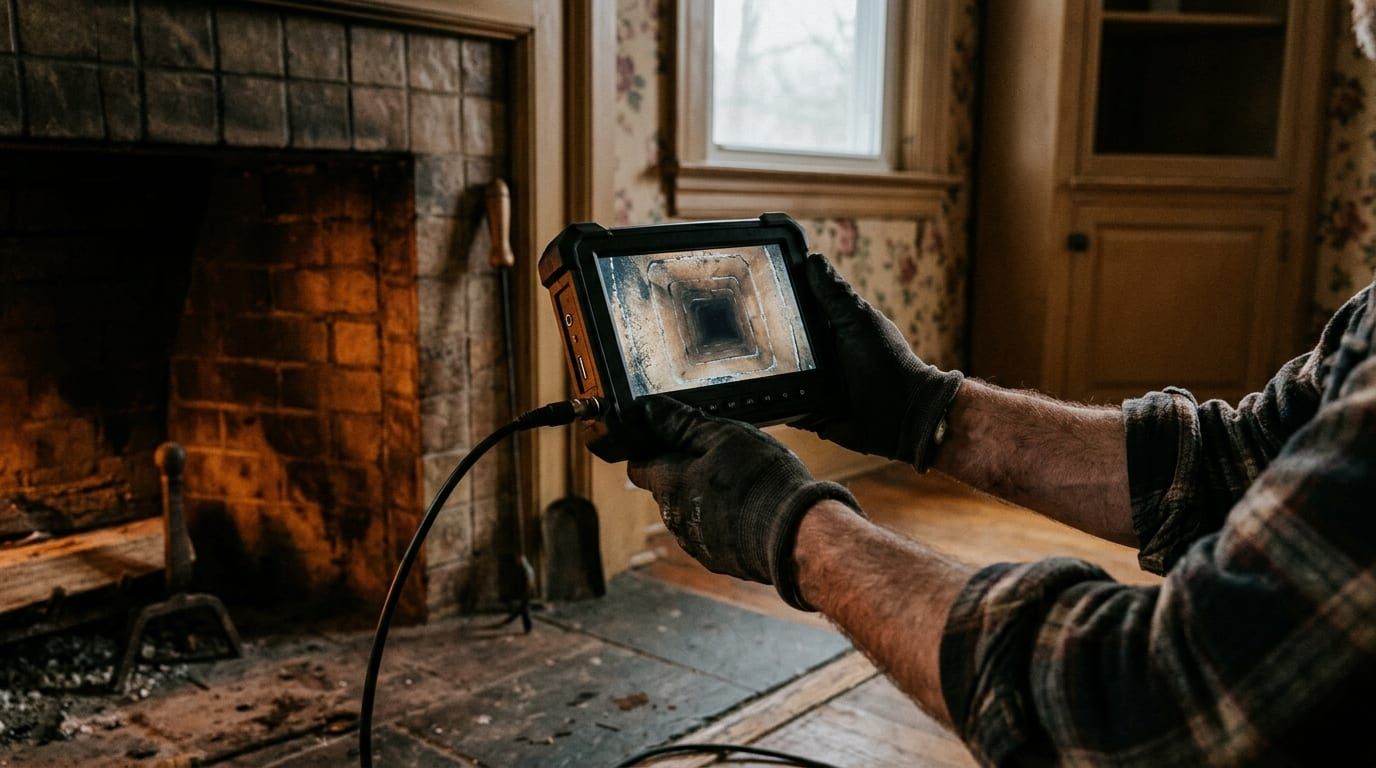
In a shared or party-wall chimney, more than one flue often runs up the same stack, one for each appliance and sometimes one for each household. The basement pipes will not tell you which is which. A camera run down each flue, while the appliance in question is actually firing, will.
The short answer
A shared chimney stack in a twin, a duplex, or a converted two-family almost always carries more than one flue inside it: separate clay-tile or metal liners bundled behind a single brick chase, each one built to serve one appliance. Which flue belongs to your furnace, your water heater, or your fireplace is not something a homeowner can read off the basement connector or guess from where it exits the roofline. Appliances get swapped and connectors get rerouted during renovations, and a century of small changes leaves no reliable paper trail behind it. The only way to answer the question with certainty is a video camera run down each flue while the appliance in question is actually operating, matching draft, diameter, and liner condition to one specific connector rather than to a guess.
One Chase, More Than One Flue
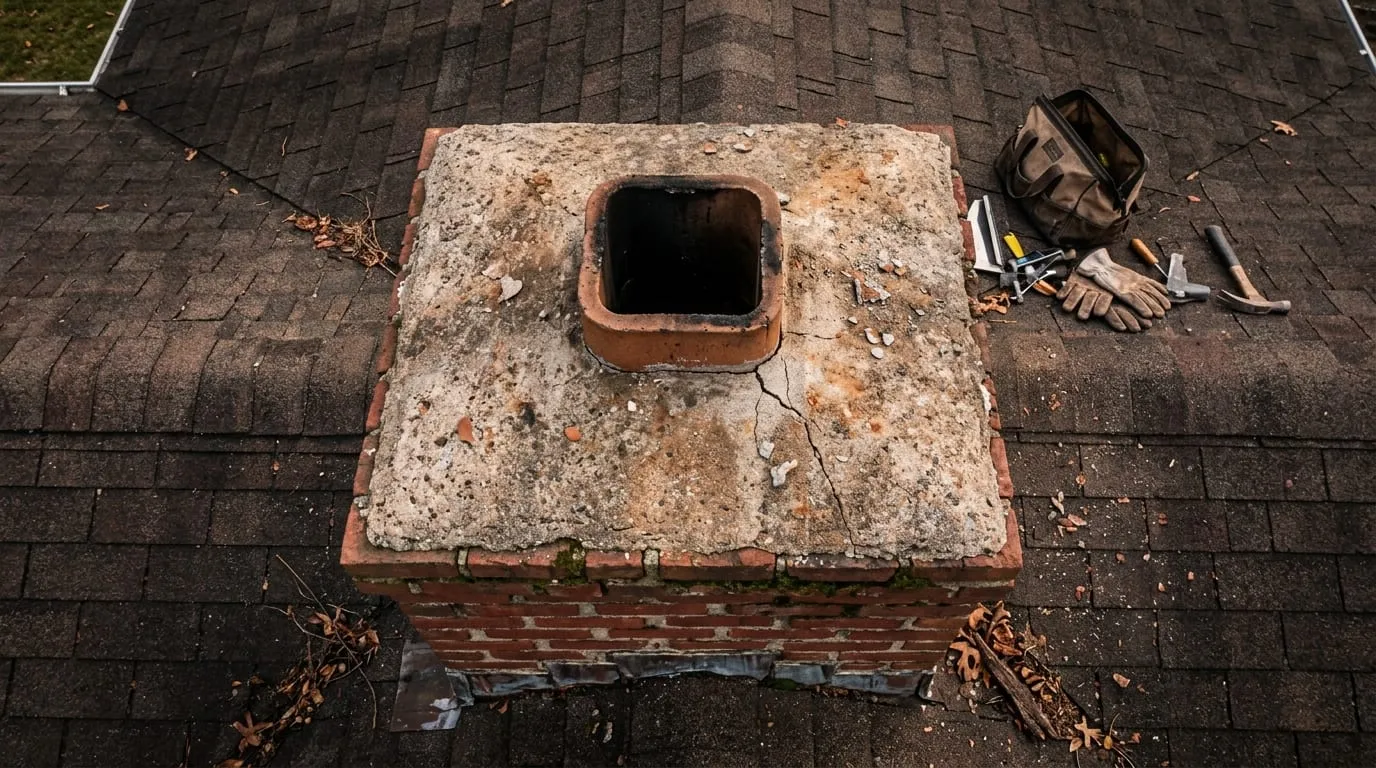
Older attached housing across Camden County was built this way on purpose, not by accident. A Collingswood foursquare or a Haddonfield twin from before 1940 typically has one brick chase carrying two, three, or more flues side by side: a furnace flue, a water heater flue, sometimes a fireplace flue, all bundled behind a single crown. In a true two-family or a semi-detached twin, that same chase can carry flues belonging to two entirely different households. From the street, or even from the roof, it reads as one chimney. Inside the chase, it is several separate flues that happen to share a cap.
- A furnace flue, a water heater flue, and a fireplace flue can all exit through one crown
- Twins and duplexes often route each household’s flue up the same shared chase
- The count of flue openings at the top rarely matches the appliances a homeowner can name
Why the Basement Doesn’t Answer It
Fuel conversions compound the confusion rather than clearing it up. A stack built for coal was commonly reconnected for oil decades later and then for gas after that, and each conversion is a fresh chance for a connector to land on a different flue than the one before it used. Haddonfield’s oldest housing has been through exactly that sequence more than once, sometimes twice. Nothing about a gas water heater standing next to an old masonry chase tells you, on sight, which of the several openings above it that water heater is actually using, and a wrong guess here is not a cosmetic error. It is the difference between a flue sized and lined for the appliance connected to it and one that was never built for that appliance at all.
What a Camera Run Actually Shows
The fix for not knowing is not a better guess, it is watching. We run a camera down each flue in the stack while the appliance in question is actually firing, and read the draft, the liner material, and the diameter against what that specific appliance needs. A furnace flue behaves differently on camera than a water heater flue or an open fireplace flue, and once one is confirmed, the rest of the chase gets sorted out by elimination rather than assumption.
- Which flue draws when one specific appliance is running and the others are not
- Whether the liner material and diameter match that appliance, or were sized for whatever used to be connected
- Where two flues in the same chase have failed toward each other instead of staying separate
When Two Households Share One Answer
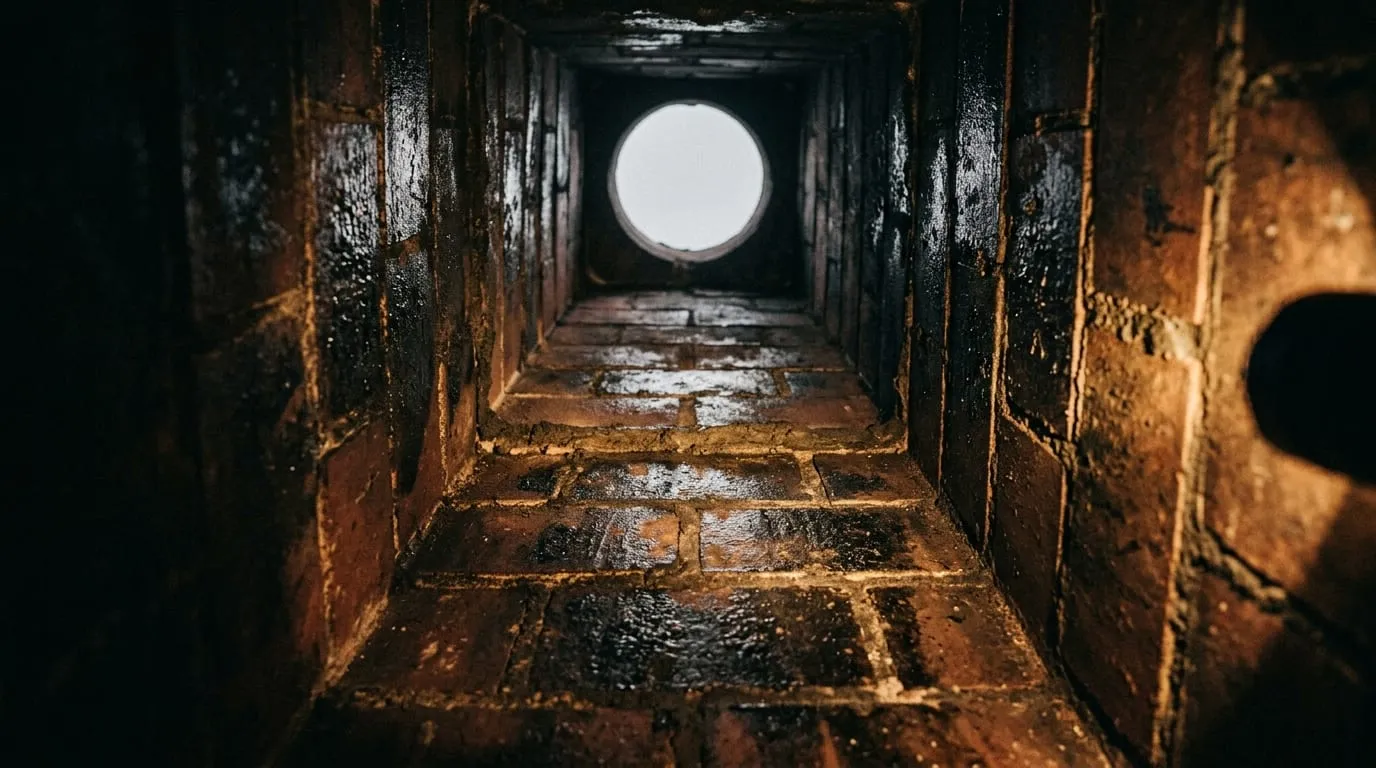
In an actual two-family, or a twin where each side has its own furnace, the two households’ flues frequently sit in the same chase, separated by nothing more than a wythe of brick. When that wythe has cracked or eroded, combustion byproducts can migrate from one flue into the other, so a smell or a smoke complaint reported in one unit can have its source in the neighbor’s flue rather than its own. Diagnosing that properly means inspecting both flues, not just the one attached to the complaining household’s appliance, which makes it one of the few findings in this trade that genuinely calls for talking to two customers about a single chimney.
Multi-Unit Buildings Ask the Same Question Differently
At the far end of our service area, Flemington Borough carries the same question at a different scale: 56.9 percent of its housing sits in multi-unit structures, some in buildings of fifty units or more, with mains gas dominant and essentially no wood heat left to sweep. There, the shared-venting problem shows up less as several masonry flues in one chase and more as long horizontal dryer and duct runs threading through a common chase toward one roof termination, where a run built past what the code allows is the recurring finding rather than a mystery flue. The habit that solves it is the same one that works in a Collingswood twin: confirm what is actually connected to what before assuming anything.
Shared Chimney Questions
How do I find out which flue in a shared chimney serves my furnace?
There is no reliable way to tell from the basement or the roofline alone. We run a camera down each flue in the stack while your furnace is actually firing and match draft and liner condition to your specific appliance, rather than assuming based on position.
Can one flue serve two different homes in a twin or duplex?
Usually not the same flue, but two different flues very often sit in the same shared chase, separated by a thin wythe of brick. That wythe is what can fail and let one flue’s exhaust migrate toward the other, which is a different problem from one flue truly serving two households.
My chimney went through an oil-to-gas conversion. Does that change which flue is in use?
It can. Each fuel conversion is a chance for the new appliance’s connector to land on a different flue in the stack than the old one used, and there is rarely a written record of the switch. That is exactly the situation a camera inspection is built to sort out.
Does this shared-flue question only affect old twins, or does it show up in apartment buildings too?
It shows up anywhere venting is shared, just in a different form. In dense multi-unit buildings like the ones common toward Flemington, the same question usually appears as a long dryer or duct run sharing a chase with a neighboring unit’s vent rather than as several masonry flues bundled together.
Not Sure Which Flue Is Which?
Tell us what you are actually seeing: smoke in one room but not another, a water heater installed after a furnace swap, a fireplace nobody has used in years. We will tell you whether that calls for a camera inspection, a sweep, or a repair before we ever climb on the roof.
Related Chimney Services
Chimney Inspection
A camera-based inspection that identifies exactly which flue serves which appliance before any work gets quoted.
See the serviceChimney Sweep
Sweeping done flue by flue, so a shared chase gets every liner cleared and not just the one that was easiest to reach.
See the serviceChimney Repair
Relining and wythe repair that gives an ambiguous shared flue a single, confirmed appliance to answer for.
See the service