Stage One, Two, Three: What Creosote in the Flue Is Actually Doing
Creosote does not stay one substance. It starts as a black powder that falls on its own, thickens into a crusty layer a brush has to work at, and ends as a hardened glaze that resists bristles entirely — the only stage able to ignite inside the flue by itself.
What the three creosote stages mean
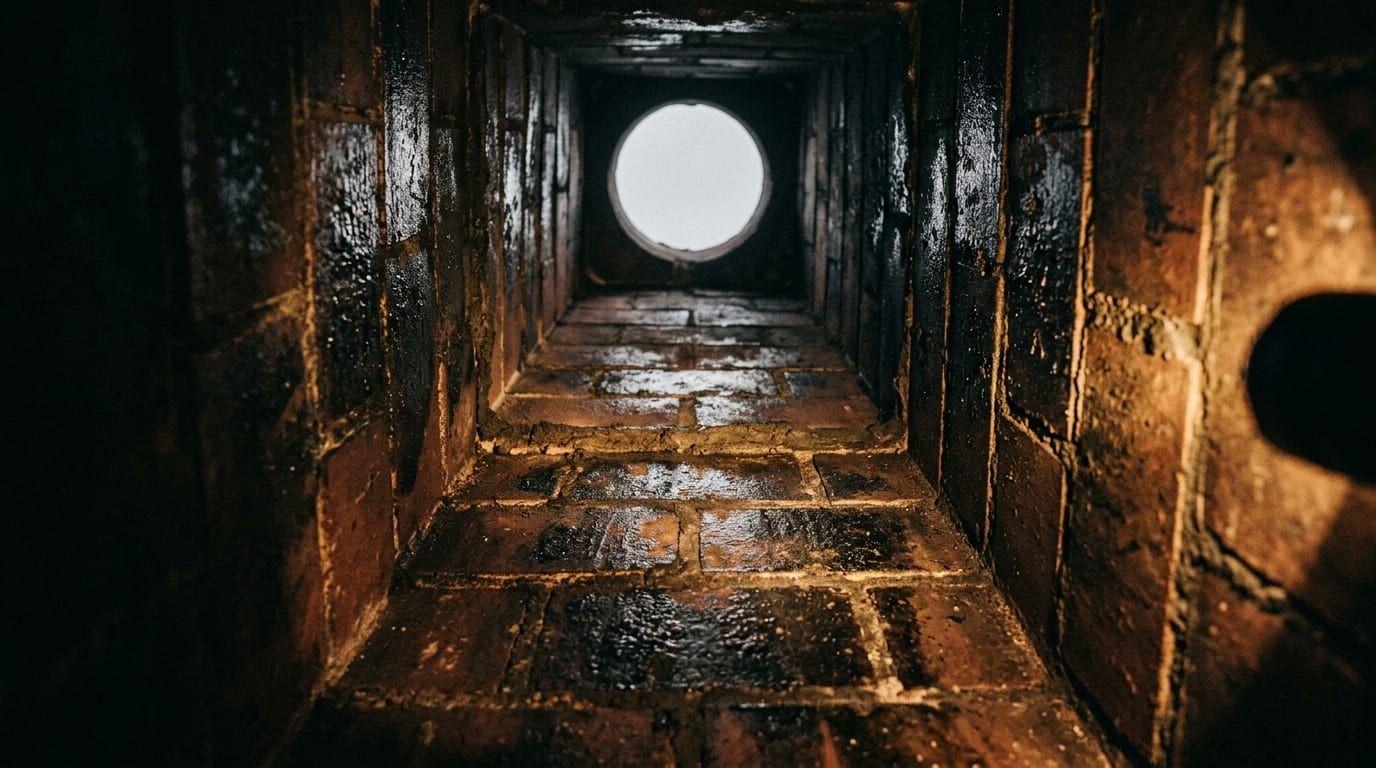
Creosote does not stay one substance as it builds. Chimney professionals and the fire service both grade it in three stages, and the stage that is present — not just the fact that creosote is present — decides what has to happen next. First-stage creosote is soot: a dry, black, flaky powder light enough to fall off the flue wall on its own, and a normal byproduct of any wood fire that a routine annual sweep clears completely. Second-stage creosote is thicker and rougher, a crusty, granular coating that still comes off with a stiff brush but takes real effort and more than one pass. Third-stage creosote is glazed: shiny, hardened, and bonded to the flue tile rather than resting on top of it. A standard brush will not touch it, and it is the one stage capable of catching fire inside the flue on its own, independent of anything happening down in the firebox.
How Wood Smoke Turns Into a Coating on Brick
Wood smoke going up a flue carries unburned wood tars, water vapor, and fine particulate that never combusted in the firebox. None of that becomes creosote until it meets a flue surface cool enough to condense it, the same way breath fogs a cold window. A flue that runs hot and steady vents most of that vapor straight out. A flue that runs cool, or one so oversized for the appliance connected to it that the exhaust loses heat before it clears the top, gives the vapor somewhere to land and stay.
- A flue sized for a bigger appliance than the one actually connected to it, so the exhaust cools before it reaches open air
- Green or unseasoned firewood, which burns wetter and pushes more moisture and unburned tar up the flue per log
- A damper closed down too far, starving the fire of air and forcing it to smolder instead of burn clean
Stage One and Stage Two Both Still Answer to a Brush
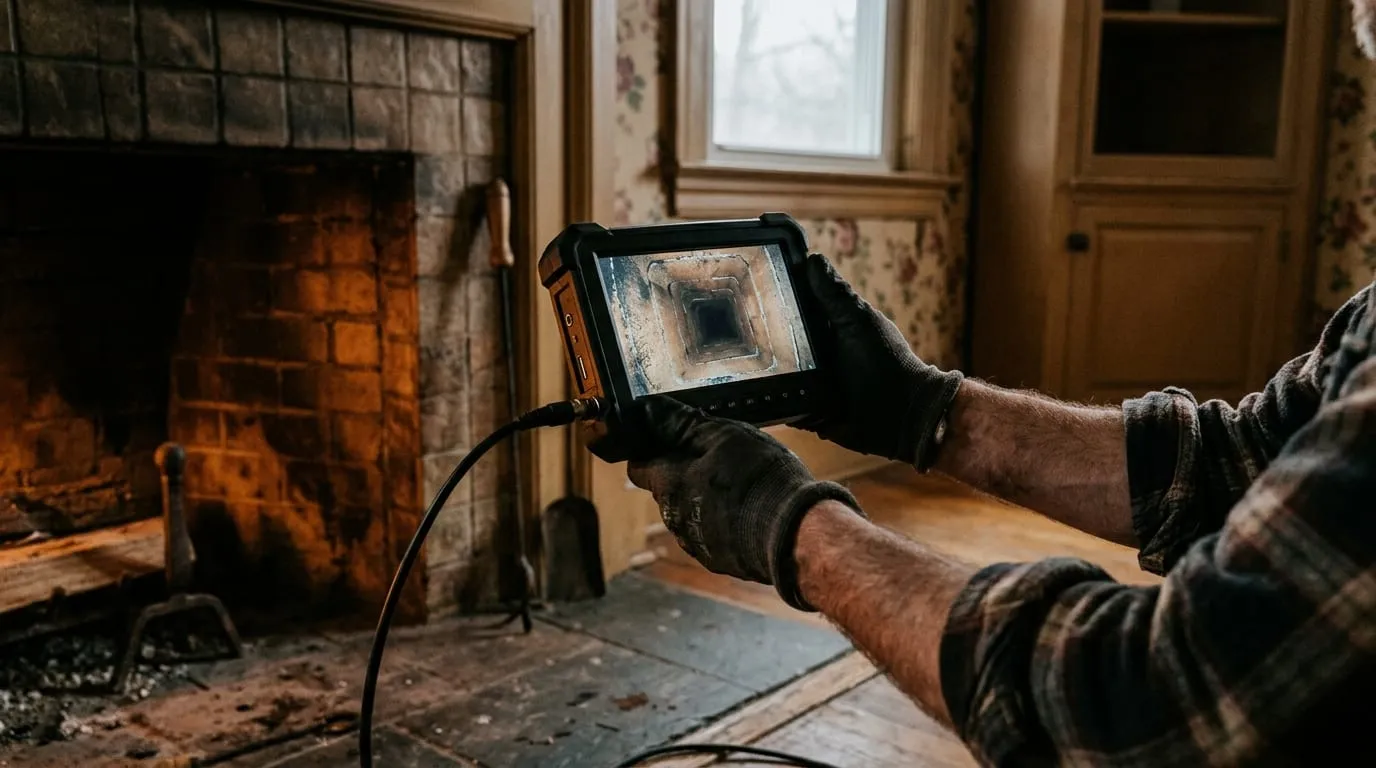
On a camera, stage one looks almost like ash that stuck to the wall instead of falling into the firebox — matte, dark, and uneven in thickness. It clears out on the first or second brush pass and does not usually change how a sweep is scheduled. Stage two has more body to it: a rougher, crusted texture built up in layers rather than sitting as a single dusting. A poly or wire brush still clears it, but it takes longer, and a flue that has reached stage two is telling you something about how it gets used — a fire that smolders more than it burns, or one that never reaches the temperature needed to keep pace with what is going up it.
Stage Three Is a Different Material, Not Just More of the Same
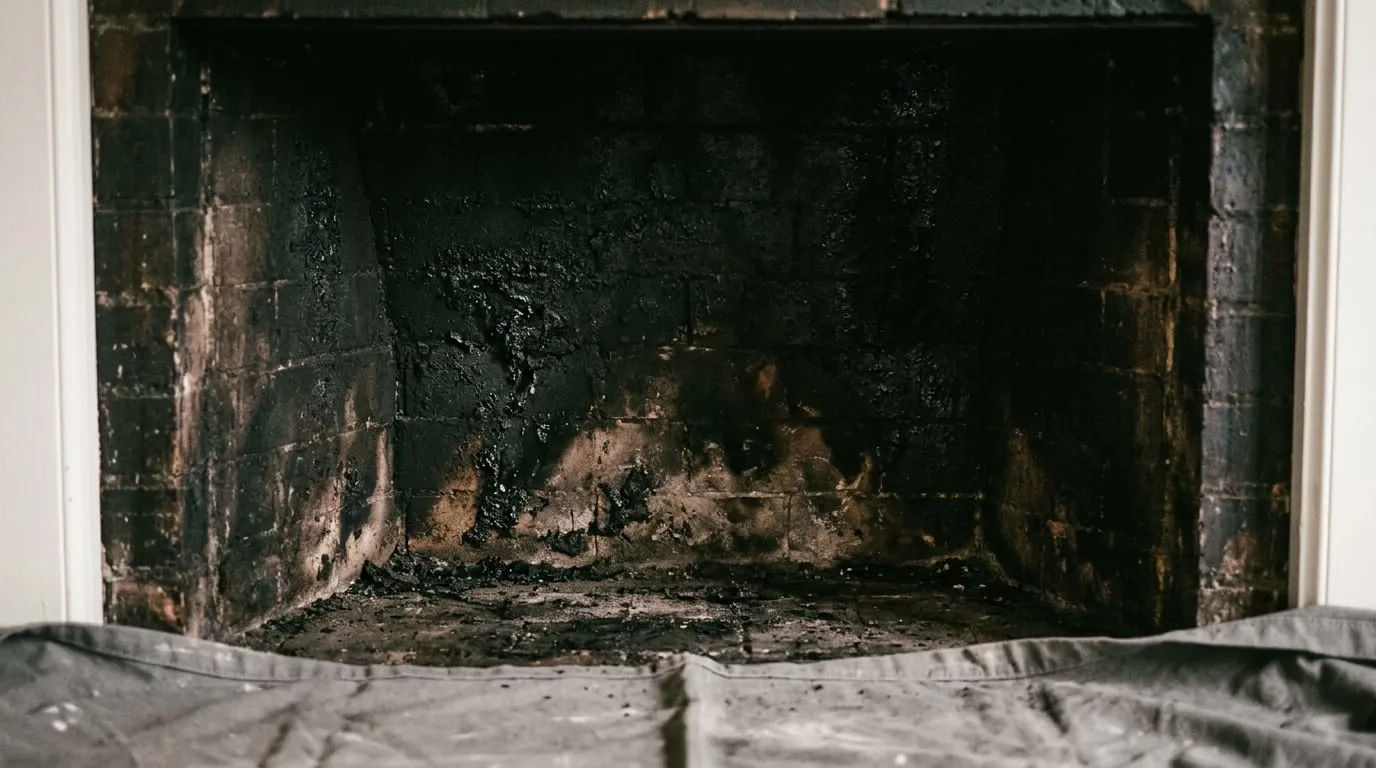
Glazed creosote is not a thicker layer of soot. Repeated cycles of condensing, partly drying, and condensing again fuse the deposit into something closer to hardened tar than to ash, bonded directly to the tile liner or brick rather than sitting loose on it. A standard chimney brush rides over the top of it without removing anything. NFPA 211, the fire-protection industry’s own inspection and construction standard, treats this stage as the one most directly tied to chimney fires, because a hard, fuel-rich coating lit by nothing more than a hot flue-gas surge is exactly the mechanism a chimney fire runs on.
Getting It Off Is a Different Job Than Getting Soot Off
Removing glazed creosote is not a longer version of a routine sweep. It usually calls for mechanical tools built for the job — rotary whips or chain flails that chip and cut the deposit loose — sometimes paired with a chemical creosote modifier applied ahead of time to make the glaze more brittle. Either way, the point is not just a clean-looking flue. Glazed creosote hides the tile underneath it, and a liner that has cracked, spalled, or separated at a joint is often only visible once that black coating is gone — which is also the moment a repair or reline gets scoped honestly instead of guessed at.
What the Census Doesn’t Count: Cherry Hill’s Real Wood-Burning Homes
Cherry Hill Township’s own housing survey counts 157 households — half a percent of its 30,775 housing units — as heating primarily with wood, against 23,961 households on utility gas. Read at face value, that looks like proof that almost no one here burns wood. It isn’t proof of that at all. The American Community Survey only asks what fuel heats a house most of the time, so a Colonial with a gas furnace and a wood-burning fireplace lit four or five nights a winter shows up as a gas household with zero recorded wood use. So does a finished-basement stove kept mainly for outages, or a fireplace nobody has lit since a mild December. Voorhees Township, a few minutes south, shows the same pattern taken further: 13 wood households out of 12,772 units, close to a rounding error, in a town built through the 1970s and 80s around factory fireplaces meant to be lit occasionally rather than to carry a house through winter. None of those numbers describe creosote, because creosote does not check how a household answered a Census form before it starts coating a flue.
Creosote stages, answered plainly
Can I tell what stage my creosote is in myself?
Only partly. A flashlight down the firebox shows the first few feet of the flue at best, and stage one and stage two can look similar from that angle even though they call for different amounts of brushing. A camera passed the full length of the flue is the only way to see the whole run, including the parts a homeowner never gets a straight look at.
Does a gas fireplace or gas insert produce creosote?
No — burning natural gas or propane does not create the unburned wood tars that condense into creosote. The exception is a masonry fireplace that burned wood for years before being converted to gas: whatever creosote built up during its wood-burning life is still on that flue until someone actually removes it.
If I only burn a few fires a season, do I still get creosote?
Often more than someone who burns often and hot. A fire lit occasionally tends to be started cold, run cooler, and closed down early, and all three of those keep the flue below the temperature that carries condensable vapor straight out. Frequent, hot fires clear more of it as they go; occasional, smoldering ones are the pattern that tends toward stage two and stage three.
Can stage three creosote just be brushed out like the earlier stages?
No. A standard poly or wire chimney brush is built to scrape a loose or crusted deposit off the tile, and glazed creosote is bonded to the tile rather than sitting on it. Removing it calls for different tools, usually a rotary or mechanical method, and the liner underneath should be checked once it’s clear, since that is often the first real look at it in years.
How often should the flue be checked if the fireplace barely gets used?
NFPA 211 recommends an inspection at least once a year regardless of how much a chimney was actually used that year, because the condition of the flue — not the number of fires burned in it — is what the inspection is checking.
Let a Camera Answer What a Flashlight Can’t
Tell us what the last inspection found, or that it has been long enough that nobody remembers. We’ll get a camera down the flue, name the stage it’s actually at, and tell you plainly what that does and doesn’t call for.
More on Chimney Condition and Care
Chimney Sweeping
Every sweep starts with a camera down the flue first, so the stage actually there gets identified before a single brush pass.
Learn moreChimney Inspection
Two inspection levels exist for a reason — a routine annual check calls for a different scope than one done after a fuel change or a chimney fire scare.
Learn more