Level 1 vs. Level 2 Chimney Inspection: What Each One Actually Covers
A Level 1 covers what a sweep can already see and reach — no ladder, no camera, no dismantling. A Level 2 goes further: a full video pass down the flue, access to the attic and roof, and a written report at the end. Here's what separates the two, what the report has to say, and when a Level 1 stops being enough.
The short answer
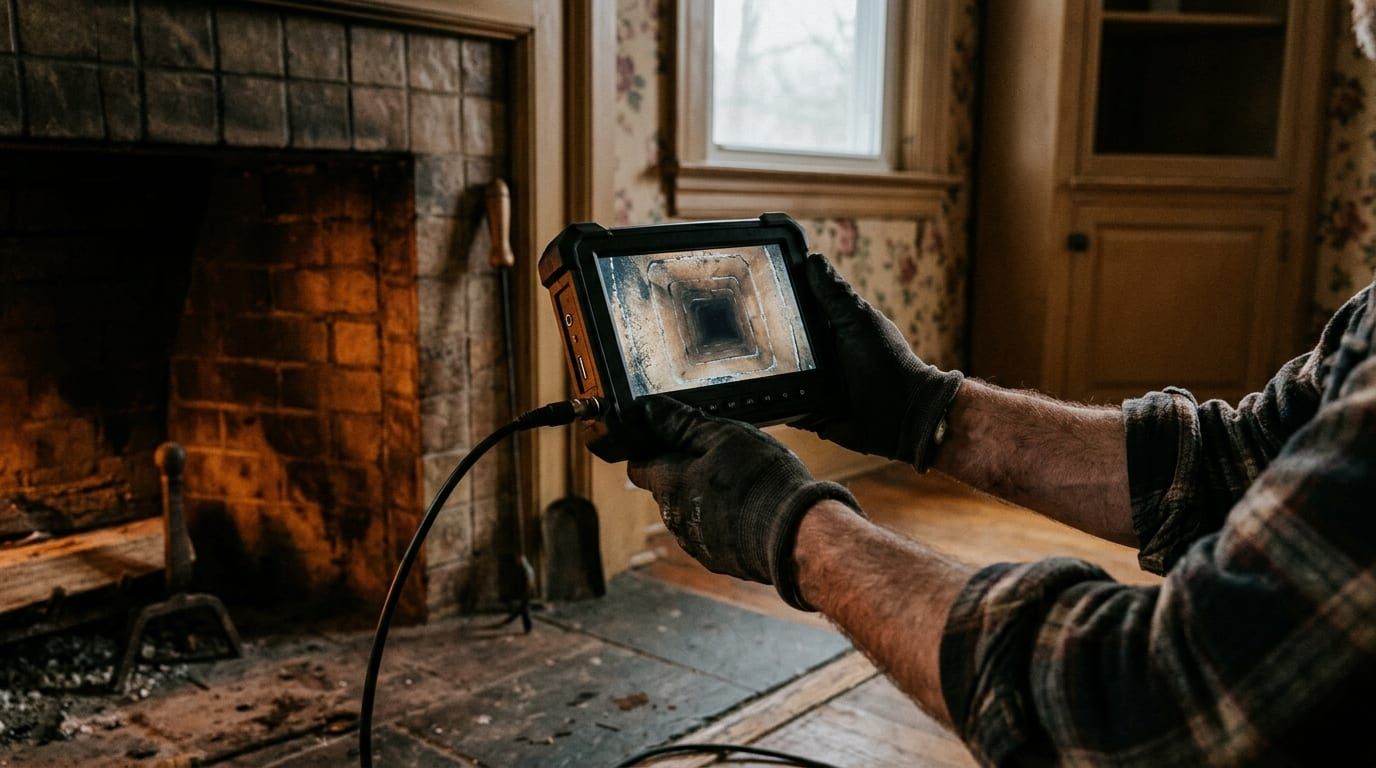
A Level 1 chimney inspection covers the parts of the system a sweep can already see and reach without a ladder, a camera, or taking anything apart — the firebox, the damper, the smoke chamber, and whatever stretch of flue is visible from the hearth or the roofline. NFPA 211 treats that as the baseline: appropriate once a year, for a system nobody has touched since the last visit. A Level 2 is a different exam. A video camera travels the full length of the flue, the technician gets into the attic and onto the roof to check what a Level 1 can't reach, and every finding goes into a written report with the footage attached. A home sale, an insurance claim, a relined flue, or a change of fuel or appliance all call for that second level, not the first.
What a Level 1 Inspection Actually Covers
A Level 1 is a visual and physical check of the parts of the chimney that are readily accessible — nothing gets taken apart, and nothing that requires a ladder into the attic or a walk across the roof gets opened up. The technician checks the firebox and hearth for soundness, tests that the damper opens and closes the way it should, looks over the smoke chamber, and inspects whatever length of flue is visible from the top or the bottom. It's the right scope when nothing about the system has changed since the last visit: same appliance, same fuel, same chimney, used the way it's always been used. NFPA 211 treats it as the baseline maintenance check, appropriate once a year for a chimney already known to be sound.
- The firebox, hearth, and damper, checked by hand and by eye
- The smoke chamber and whatever flue is visible without a ladder
- Basic soundness and clearance to combustibles — no dismantling, no camera
- The right scope when the appliance, fuel, and chimney haven't changed
What Changes at Level 2
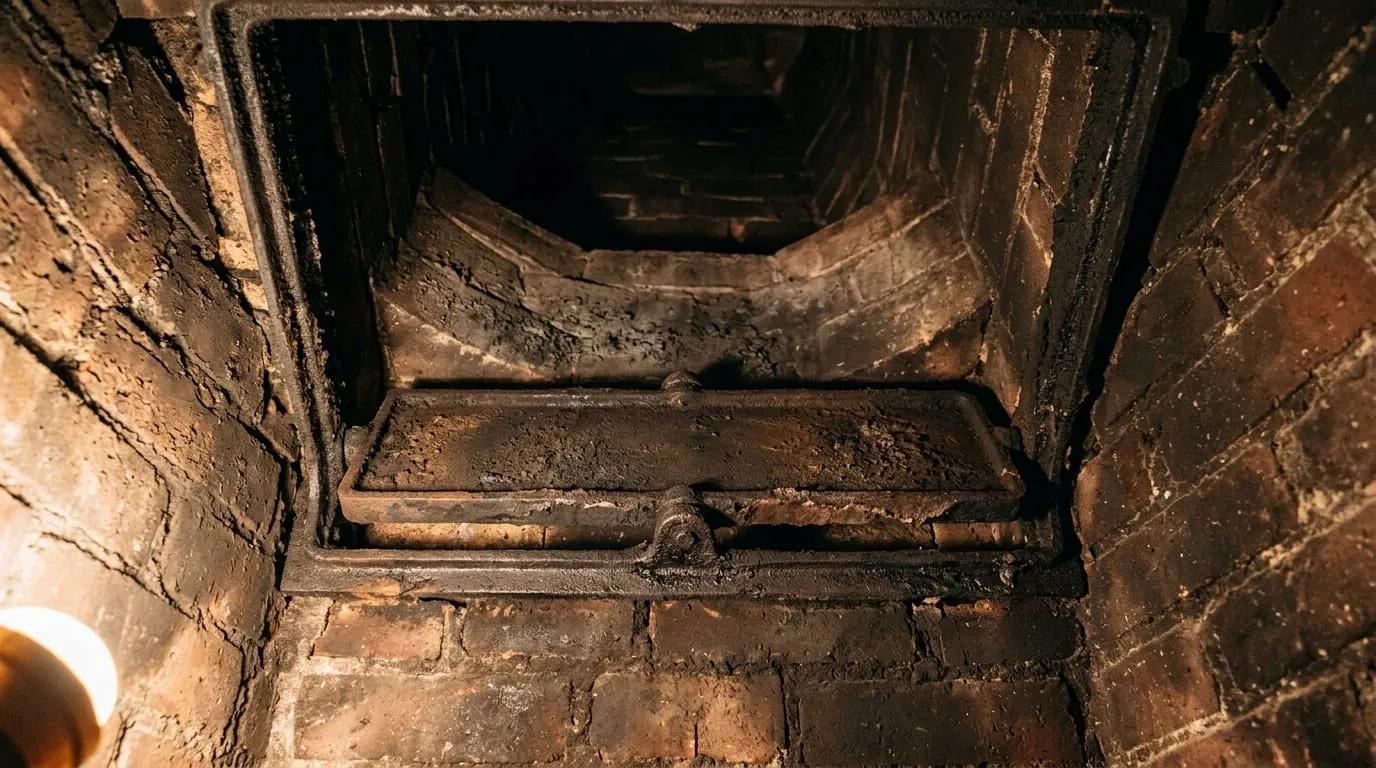
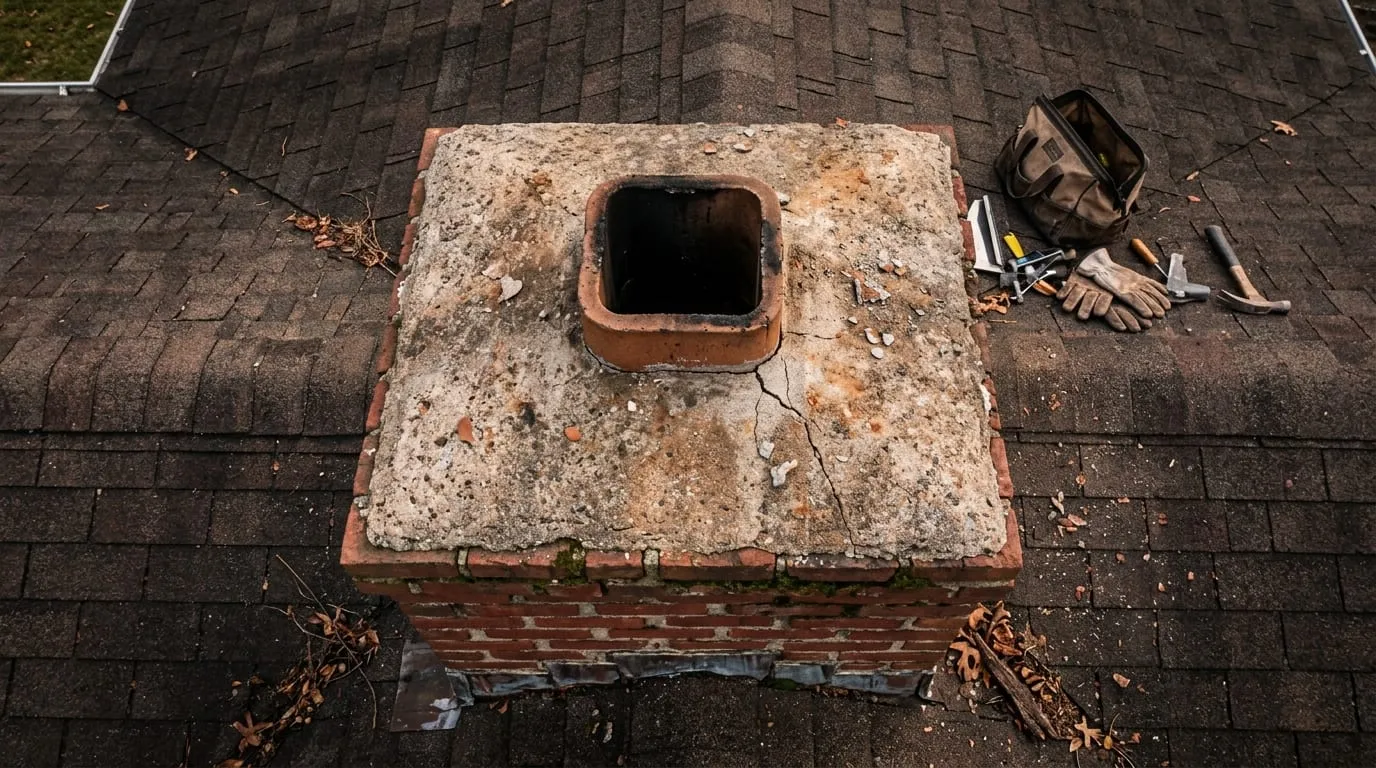
A Level 2 inspection includes everything a Level 1 does, then goes to the places a Level 1 never reaches. A video camera runs the full length of the flue, recording the interior wall from top to bottom rather than the few feet visible from either end. The technician gets into the attic and onto the roof to check clearances to combustible framing, the condition of the crown and cap, and how the flashing meets the roofline — areas no Level 1 touches, because none of them are reachable from the firebox or the hearth. Every finding gets documented with the footage and photographs attached, not summarized from memory afterward. That level of access is why a Level 2 exists as its own named inspection instead of an add-on tacked onto a Level 1 — it answers a different question about the system, not just a closer look at the same one.
- A full video pass down the flue's interior, not a look from either end
- Attic and roof access to check clearances, the crown, cap, and flashing
- Photographs and footage attached to the findings, not summarized after the fact
The Written Report, and What It Actually Has to Show
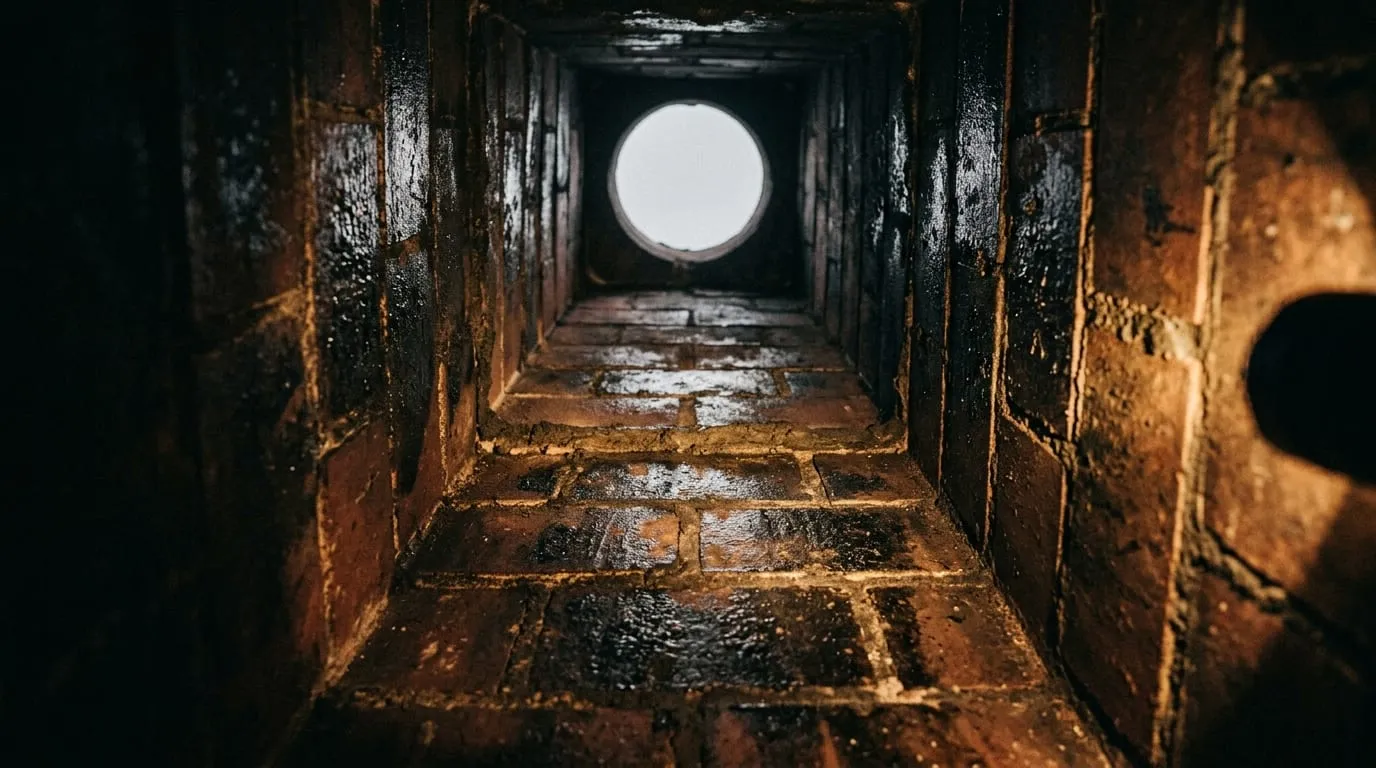
A Level 1 doesn't always produce a formal written report — a sound chimney that needed nothing done might just get a verbal all-clear. A Level 2 always does, and what goes into it is specific: which level of inspection was actually performed, any area the technician couldn't reach and why, the condition of the flue lining along its full length, clearances to combustible material, and whether the system as installed still meets the code and manufacturer listing it was built to. Anything that reads as an active safety hazard gets flagged regardless of when the chimney was built or which code applied at the time — a hazard doesn't get grandfathered in. That written record, with the video and photographs behind it, is what a title company, an underwriter, or a buyer's attorney will actually ask to see. A description of what someone saw from the driveway is not a substitute for it.
- Which level of inspection was performed, and what couldn't be reached
- The flue lining's condition along its full length, not just the visible ends
- Whether the system still meets the code and listing it was installed under
- Any active safety hazard, flagged regardless of the chimney's age or code era
When a Sale, an Insurer, or a Conversion Calls for Level 2
A Level 1 stops being enough the moment something around the chimney has actually changed. Selling or refinancing a house with an active fireplace or wood stove usually puts a Level 2 in front of a title company or a mortgage underwriter before closing — a verbal opinion doesn't satisfy either one. An insurance claim after a chimney fire, a lightning strike, or water reaching the flue through a damaged roof calls for the same full exam, because the interior of the flue is exactly what a Level 1 was never built to check.
- Selling or refinancing a house with an active fireplace or wood stove
- An insurance claim after a chimney fire, a lightning strike, or roof water damage
- Relining an existing flue
- Changing the appliance or the fuel it burns
The Conversion Trigger, and the Code It Answers To
Fuel and appliance changes are their own trigger. Relining an existing flue, connecting a different appliance, or switching fuels adds a fourth trigger: the flue that served the old setup was sized and lined for it, not for whatever is running through it now, and it's the installer, not the homeowner, who has to sign off that the new pairing is correctly sized. All four of those situations get measured against New Jersey's residential code — the 2024 IRC, not the 2021 edition still cited on some older paperwork.
Questions Homeowners Ask About Inspection Levels
Does a Level 1 include a video scan of the flue?
No. That's the actual dividing line between the two. A Level 1 covers what's visible and reachable without special access; the flue's interior only gets a camera run at Level 2.
Who typically asks for a Level 2 during a home sale?
Usually a title company, a mortgage underwriter, or the buyer's attorney, once an active fireplace or wood stove shows up on the general home inspection. A verbal opinion doesn't satisfy any of the three — they want the written report.
Can a homeowner request a Level 2 without a sale or a claim involved?
Yes. Nothing requires an event to trigger it — anyone can ask for the fuller inspection. It just isn't the baseline NFPA 211 sets for a chimney nobody has changed or damaged.
Does the report say whether an older chimney meets today's code?
It says whether the system still meets the code and listing it was built to, and separately flags anything that's become an active safety hazard since — that second part doesn't wait for a code cycle to catch up.
Does a chimney fire automatically mean a Level 2 afterward?
Yes. A fire inside the flue is exactly the kind of event a Level 1 can't evaluate, since nobody can see the full interior wall without the camera. That calls for a Level 2 regardless of how minor the fire seemed at the time.
Not Sure Which Level Your Chimney Needs?
Tell us what's actually going on — a sale in progress, a fire last winter, a new insert going in, or nothing at all since last season — and we'll tell you plainly whether that's a Level 1 or a Level 2 before anyone gets on a ladder.
Related Chimney Services
Chimney Inspection
Level 1 or Level 2, run with a video camera and closed out with a written report.
See the serviceChimney Repair
Crowns, caps, flashing, and masonry work an inspection report calls out by name.
See the serviceChimney Sweep
Clearing the creosote and debris a Level 1 or Level 2 exam flags first.
See the service