
Crown, cap, flashing and liner repair in Cherry Hill, NJ
Water gets into a chimney through the first crack in a crown, the first gap in the flashing or a cap that has rusted through, and once inside it keeps the tile and brick wet all season. We repair crowns, caps, flashing, liners and mortar joints in Cherry Hill, across Camden County and in the rest of our service area, before a small leak becomes a rebuild.
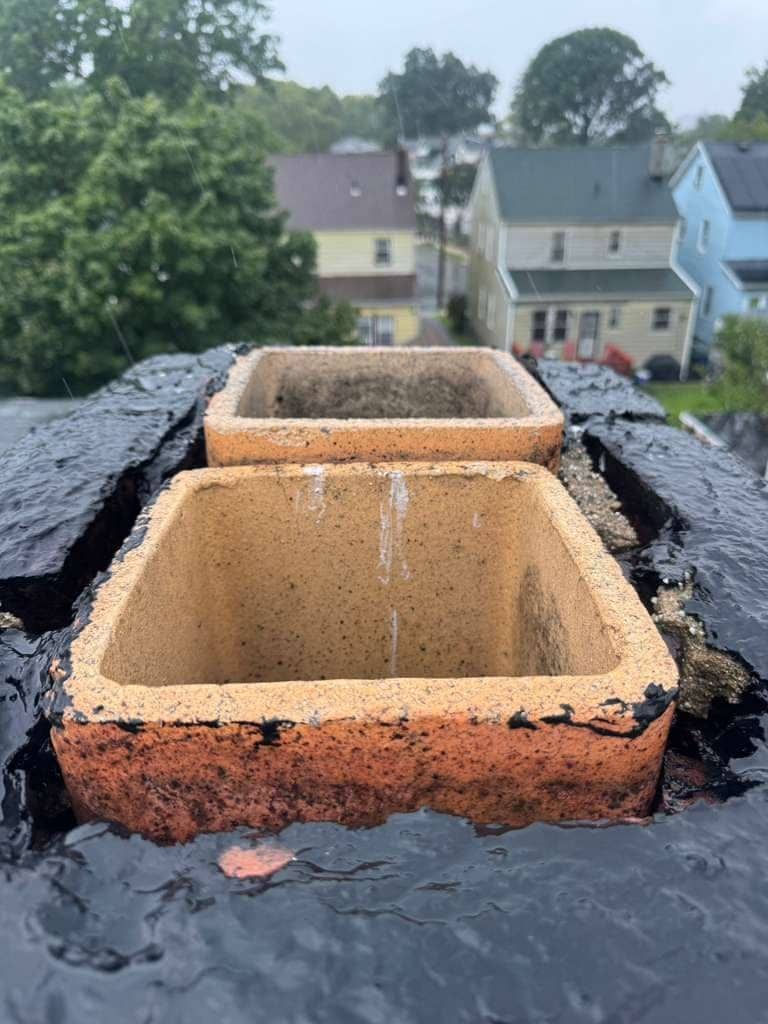
In brief
A water stain on the ceiling beside the chimney, rust on the damper or white streaks on the brick all point to the same thing, water already moving through the chimney. In Camden County, where the typical house was built in 1967, many chimneys are old enough that the crown, the flashing and the top joints have been through decades of weather. We find where the water gets in, explain it and fix it.
The crown takes the weather first
The crown is the concrete or mortar top poured over the masonry, sloped so rain runs off instead of soaking in. Nothing shelters it, so it takes the full force of rain, sun and frost. Once it cracks, water no longer runs off. It runs down through the crack, along the outside of the flue tile and into the joints below. A crack that looks like one hairline from the street is often several once we are up close.
- Fine cracks that open wider each winter as trapped water freezes
- Spalling, where the surface flakes away because water got behind it
- A crown poured flat instead of sloped
- Gaps where the crown meets the flue tile, a common way in for water
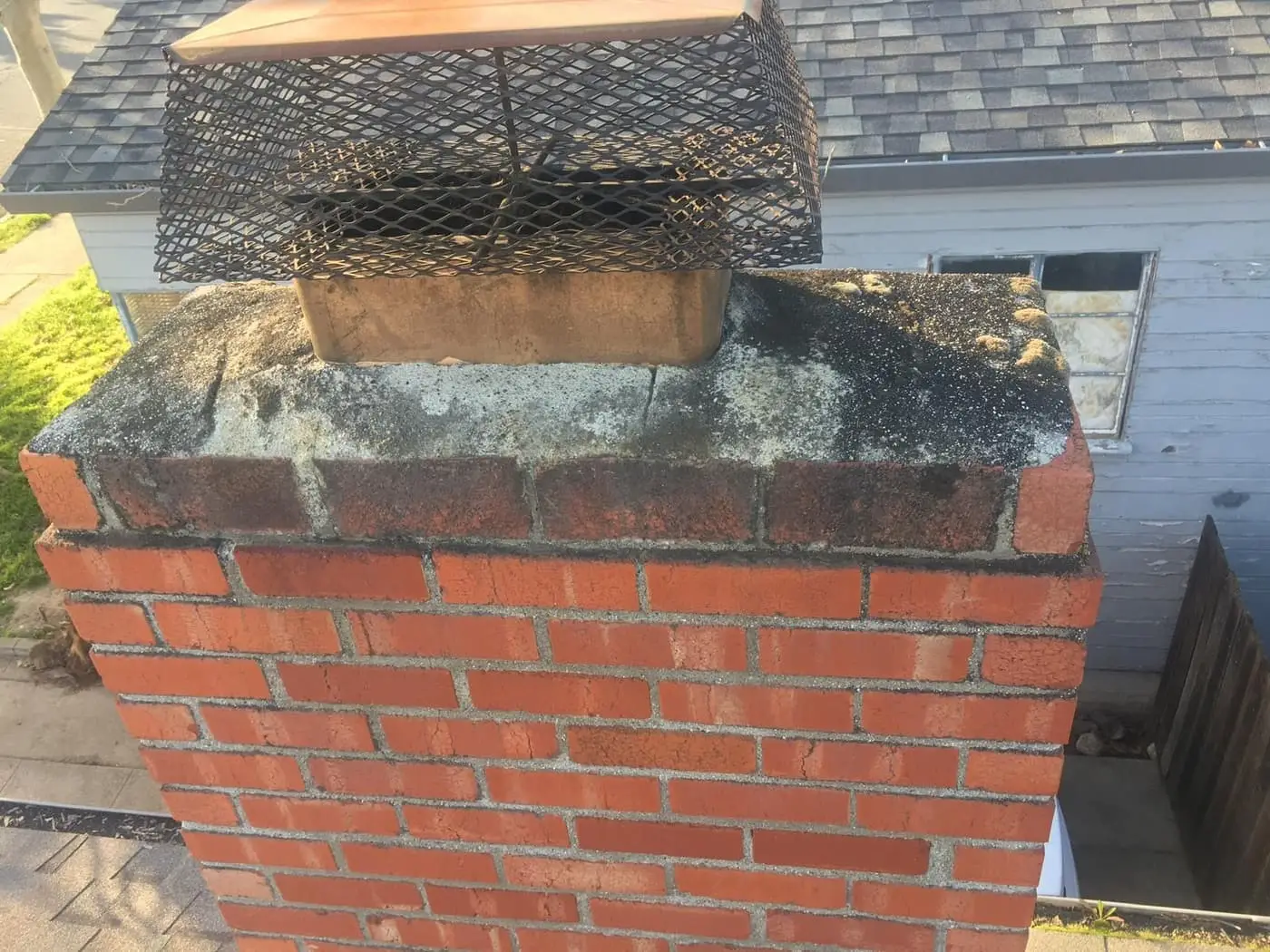
A cracked crown is more than a cosmetic flaw. It gives rain a direct path down to the flue tile.
South Jersey winters cross the freezing point about 99 times a year
Freeze and thaw is how a small crack becomes a big one. Water sits in the crack, freezes, expands and widens it, then thaws and waits for the next cold night. It is easy to assume a milder South Jersey winter is easier on masonry, but the count that matters is how often the temperature crosses freezing. The NOAA station at Moorestown, about two miles from Cherry Hill, logs about 99 of those crossings a year, close to North Jersey towns. The Philadelphia airport station shows only about 67, but it sits on paved ground that holds heat, so it understates what happens on residential streets.
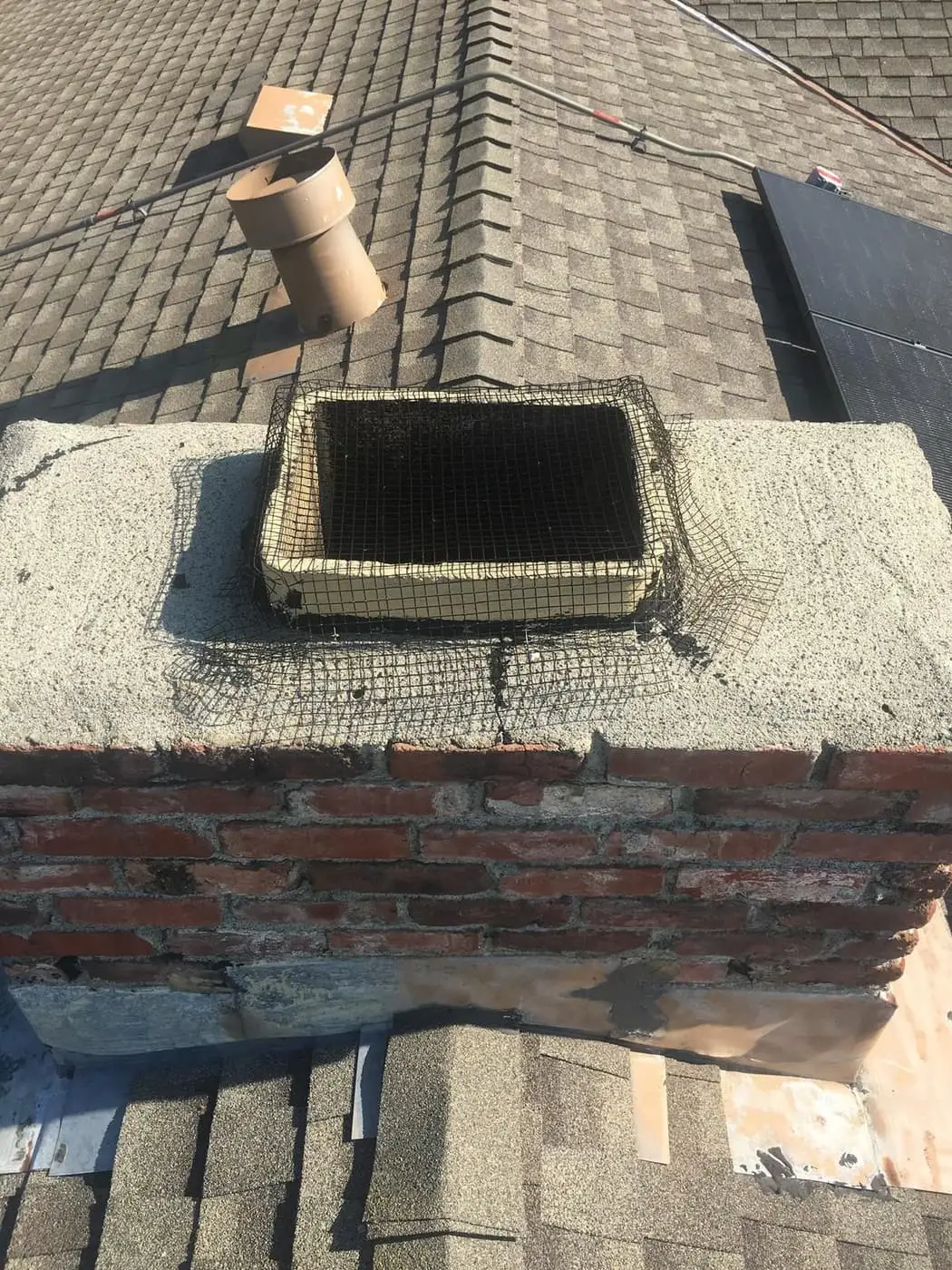
What a repair can include
Every chimney needs a different mix of work, and much of our job is working out which repairs yours actually needs before we start.
- Crown repair or a new crown, sloped and sealed
- A new cap to keep out rain and animals
- Flashing resealed where the chimney meets the roof
- Repointing, replacing failed mortar joints one by one
- Liner repair where the flue tile has cracked
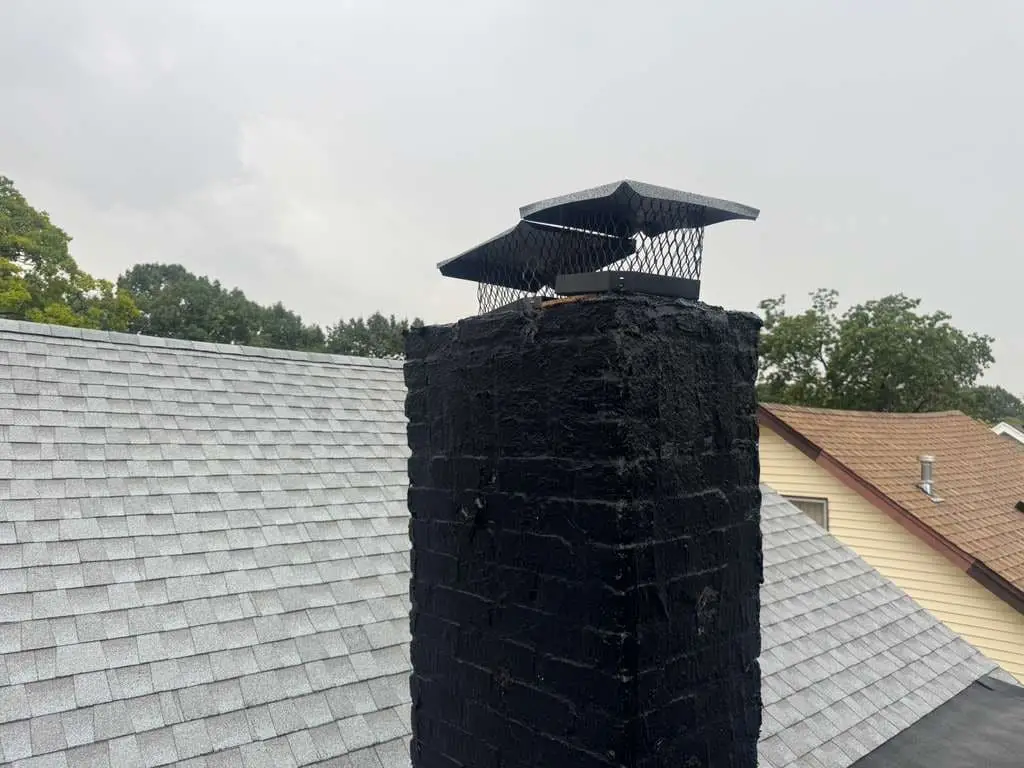
Signs to call before the next season
A stain on a ceiling next to the chimney usually comes from the chimney rather than the roof, because a leak at the crown or flashing travels down inside the wall before it shows. White, chalky deposits on the brick mean water is passing through the masonry, and a rusted damper that will not close often means moisture has already got past the cap. Each of these gets worse with every freeze, so it is best to call before the next heating season.
From Royal Chimney's Google listings
A closer look at crowns, caps and flashing
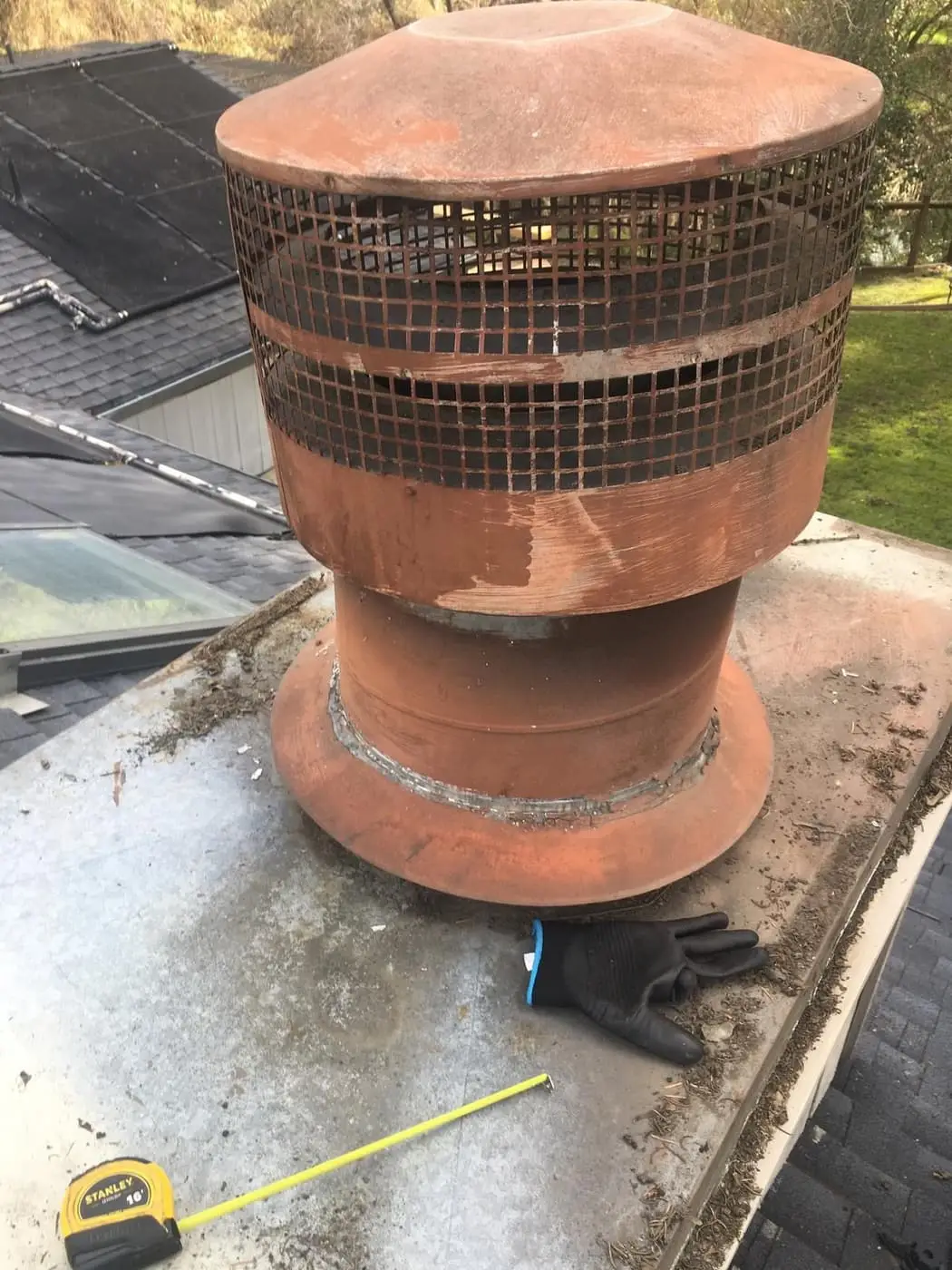
A round mesh cap on a flat chimney top, with a tape measure
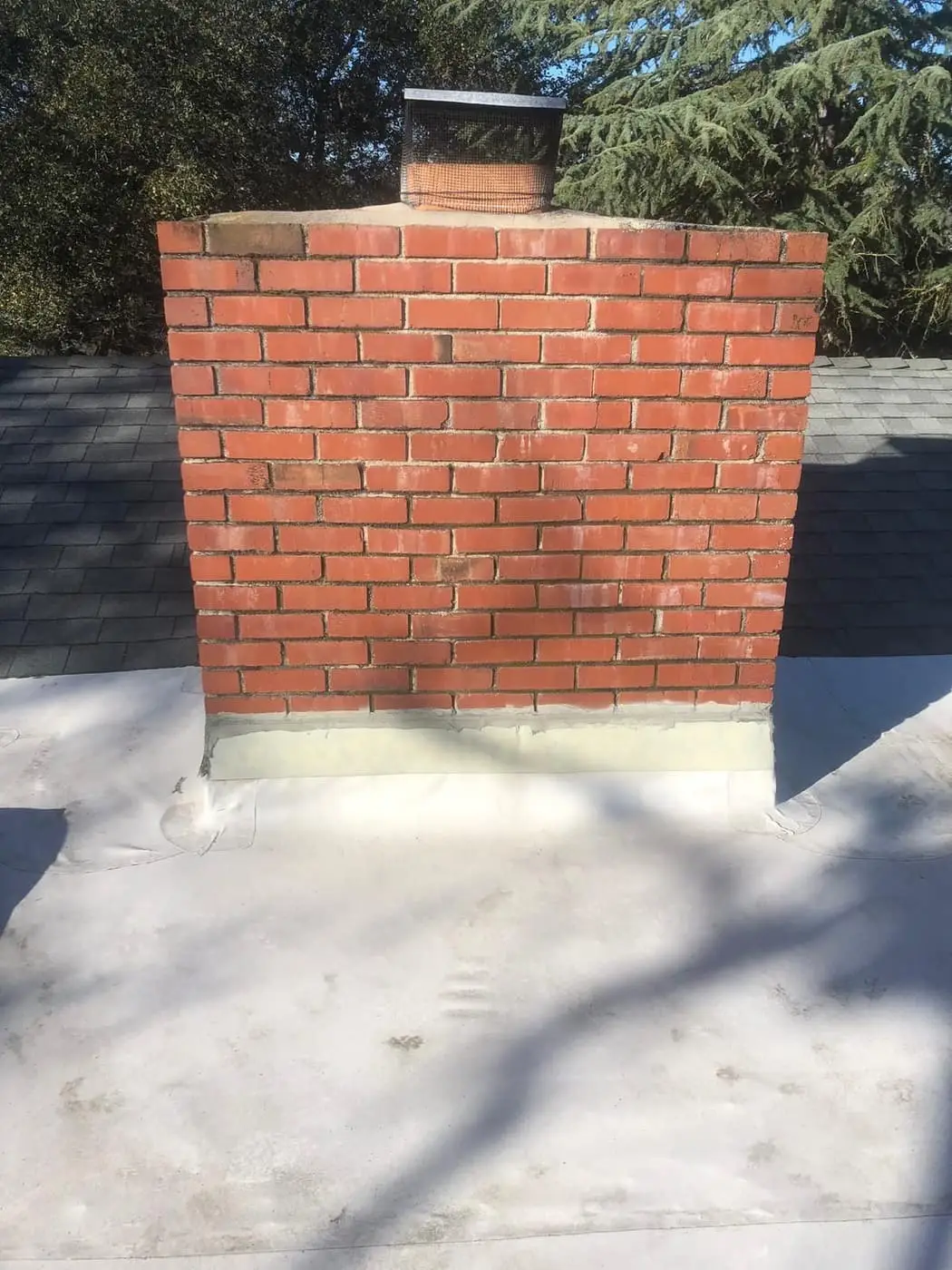
Metal flashing along the base of a brick chimney on a flat roof
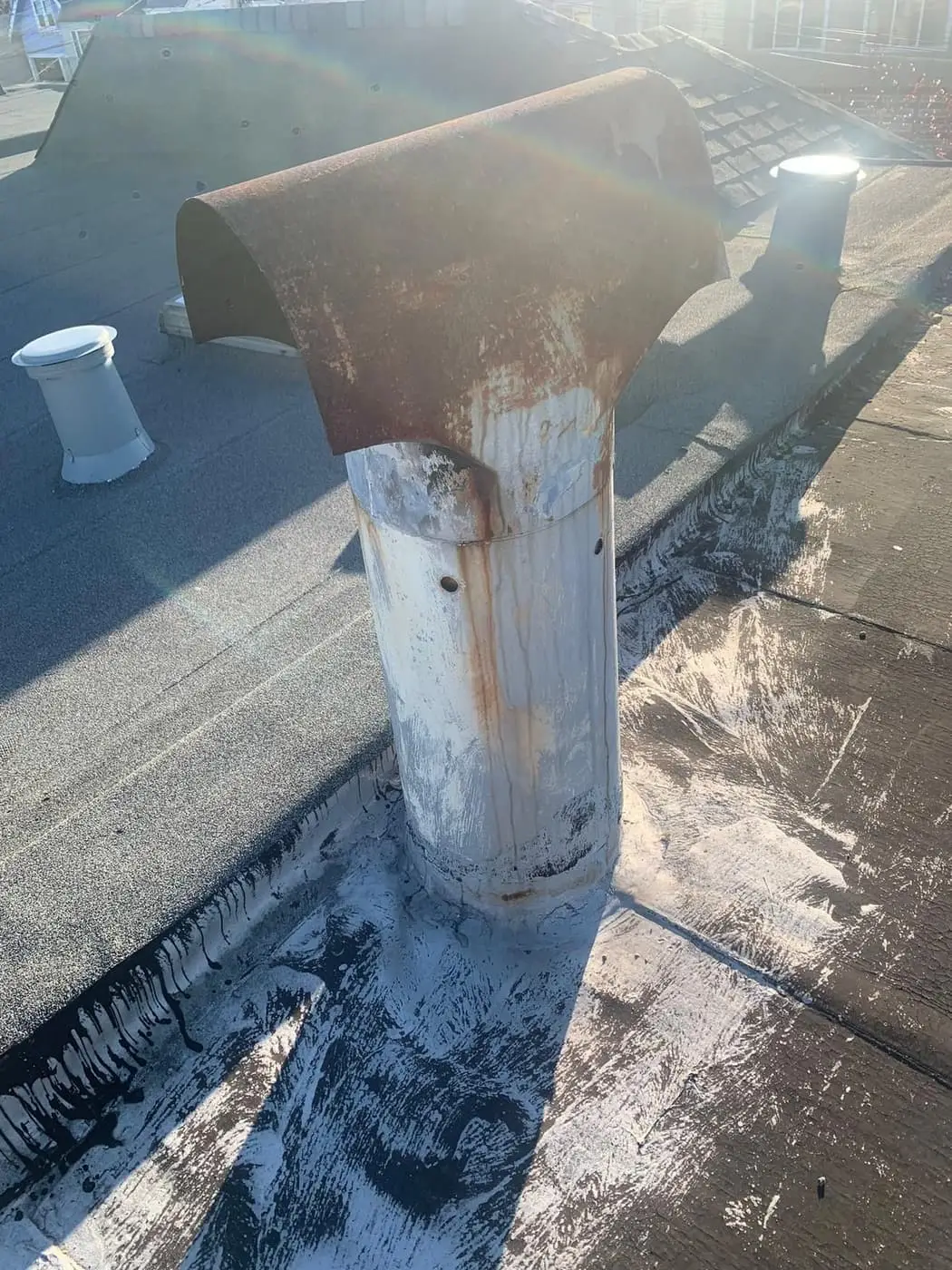
A flue pipe with a rusted hood on a flat roof
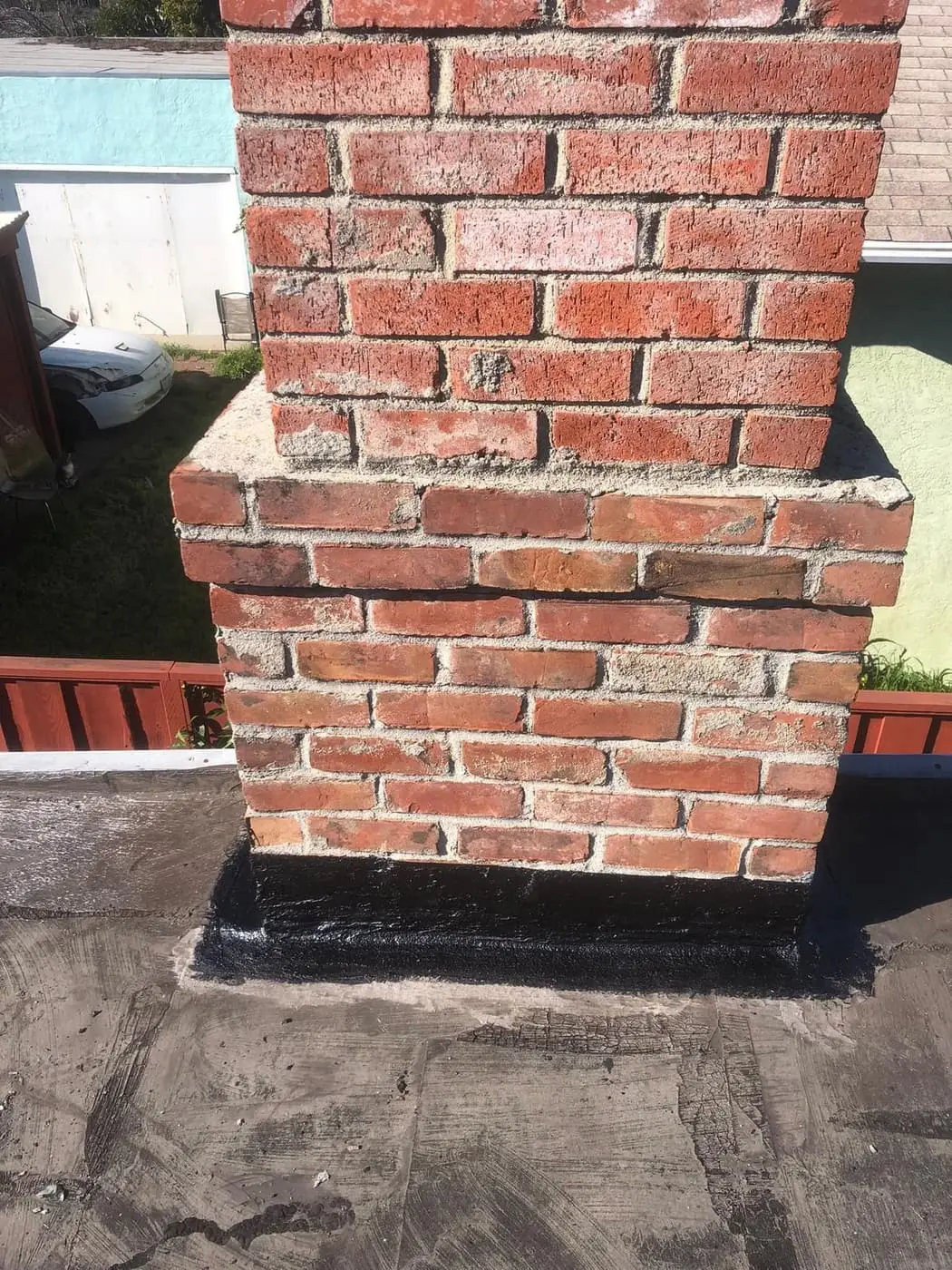
Black sealant around the base of a brick chimney on a flat roof
Reviews from our Google listing
A selection of our 5-star reviews on Google.
Polishing the ceramic glass and unblocking the air-wash intake passages turned our heavily used woodstove back into an effective heat source.
Static-cling barriers locked the aperture tight, so that high soot agitation inside the top flue never wandered into the next-door kitchen.
The entire sweep was completed with engineering precision and purity never before witnessed from meticulous pre-setup to HD inside camera feature.
Chimney repair questions
Does a chimney repair in New Jersey need a permit?
It depends on the work and the town. Construction permits in New Jersey go through the local construction office, and some repairs need one while routine maintenance does not. We tell you when a job calls for a permit.
How can you tell whether a leak comes from the crown, the cap or the flashing?
From inside they look alike, a ceiling stain, ash on the damper or a musty smell. We sort them out with a check at the roof and a camera pass down the liner.
Can the crown be repaired, or does the chimney need rebuilding?
Usually the crown can be repaired or replaced by itself. Rebuilding part of the chimney only comes up when the brick itself is breaking down.
Will homeowners insurance pay for a chimney repair?
That depends on your policy and the cause. Sudden storm damage is covered more often than slow wear from freeze and thaw, which many policies treat as maintenance.
What is the difference between repointing and rebuilding?
Repointing replaces the mortar between the bricks and leaves the bricks in place. Rebuilding takes the damaged part of the stack down and lays it again, which is only needed when the brick has failed.