
Dryer vent cleaning in Cherry Hill, NJ, along the whole run
If a load that used to dry in one cycle now needs two, the duct behind the dryer is probably narrowing with lint. We clean the full run from the machine to the outside hood, in Cherry Hill and across our New Jersey service area.
In brief
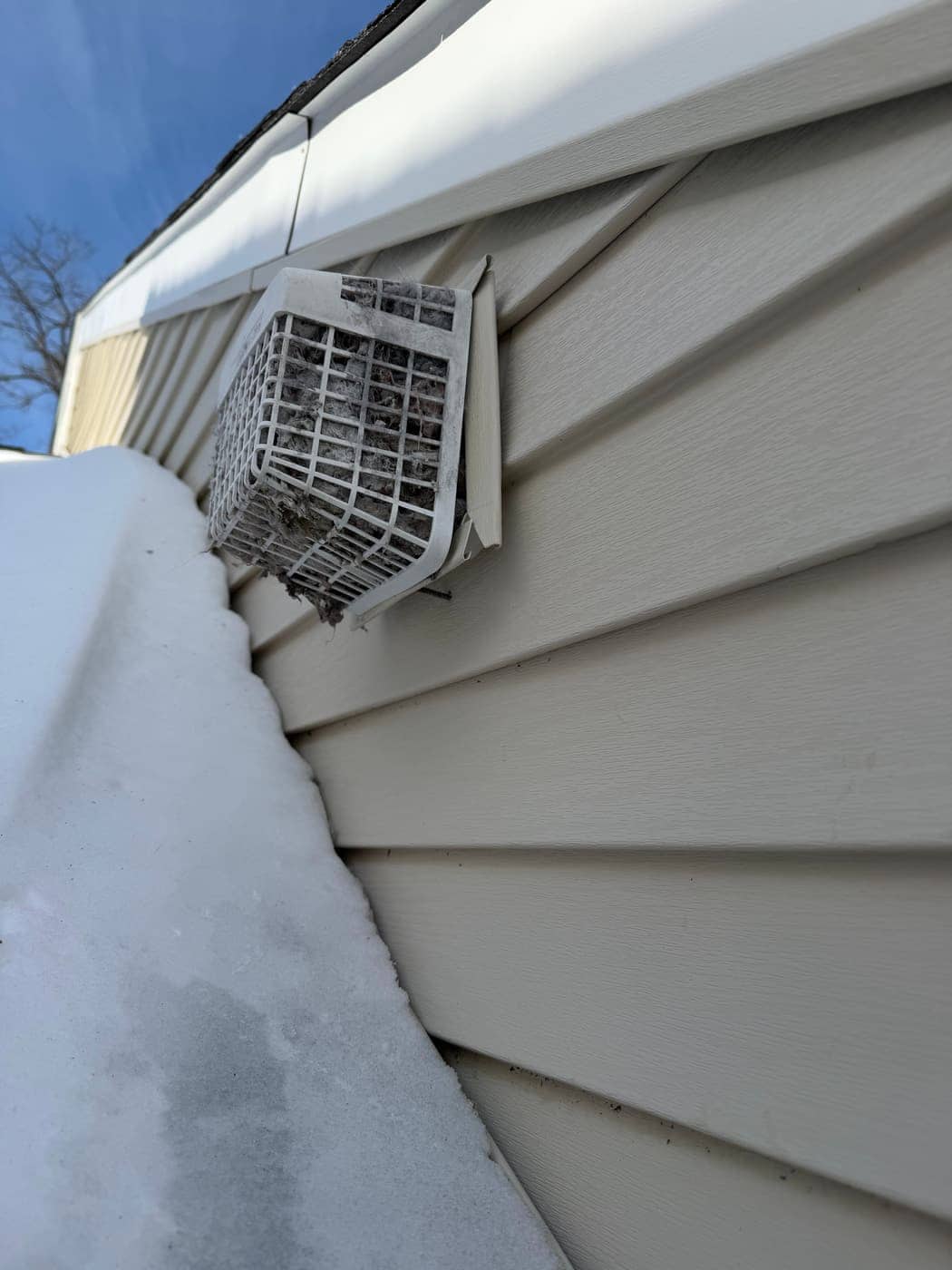
Dryer vent cleaning clears the entire duct that carries hot, damp air from the dryer to the outside, well beyond the lint screen and the short stretch a household vacuum can reach. Lint that gets past the screen settles wherever the duct bends, rises or sags, and the dryer responds by running longer. The fire risk is simple to picture, dry fiber packed near a heat source inside a pipe that was only meant to move air outdoors.
The lint screen only catches part of it
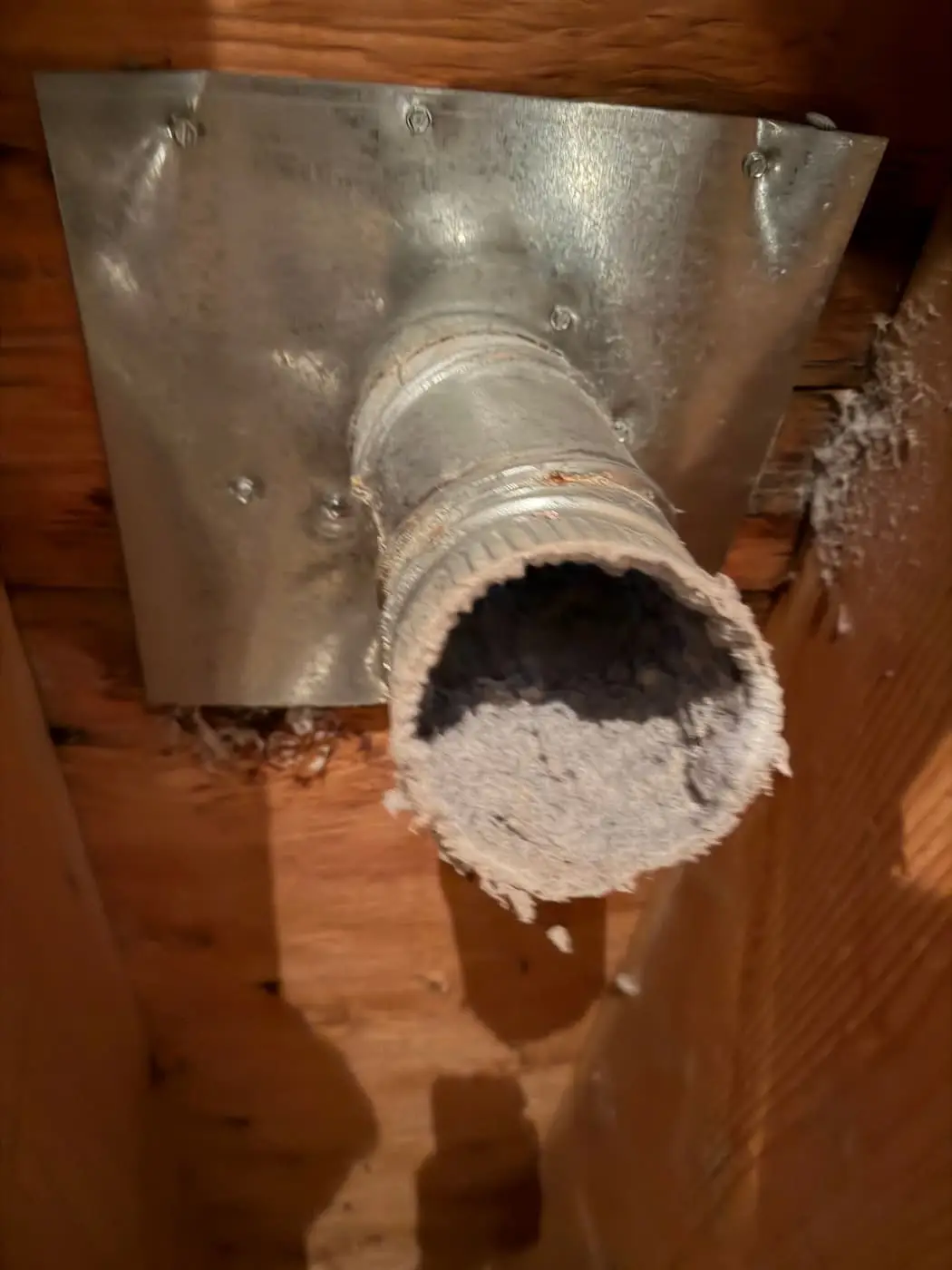
Some lint slips past the screen on every load, which is normal. Where it collects depends on the shape of the duct, and it builds up at elbows, rising sections and any place the duct sags. Even fasteners matter. The code limits screws to an eighth of an inch inside the duct, because anything that sticks in further catches lint first.
- Longer drying times are usually the first clue
- Then a hot dryer top or a humid laundry room
- A burning smell means the run is already badly blocked
A brush with no suction behind it does not remove lint. It shoves the clog to the next bend.
Cleaned from both ends, with suction the whole time
Pushing a brush from the dryer end alone tends to shove lint farther along until it lodges at the next elbow. So we open the run at both ends and keep a vacuum pulling on the line while the brush works through it. Checking the airflow at the hood afterward, with the dryer running, shows that the cleaning made a difference.
Long runs and the 35 foot limit
The code limits a dryer exhaust run to 35 feet of equivalent length, and every right-angle elbow counts as 5 feet of straight duct. In Cherry Hill's townhouses and condos, where a duct may cross a ceiling and turn several times before it reaches the outside, the elbows alone can use up much of that allowance. When a longer run is allowed by the dryer maker, the code requires a permanent label near the dryer stating its equivalent length.
- Runs that climb from a basement collect lint on every rise
- Each right-angle turn takes 5 feet off the limit
- A run nobody has measured is a run nobody can call compliant
The outside hood everyone forgets
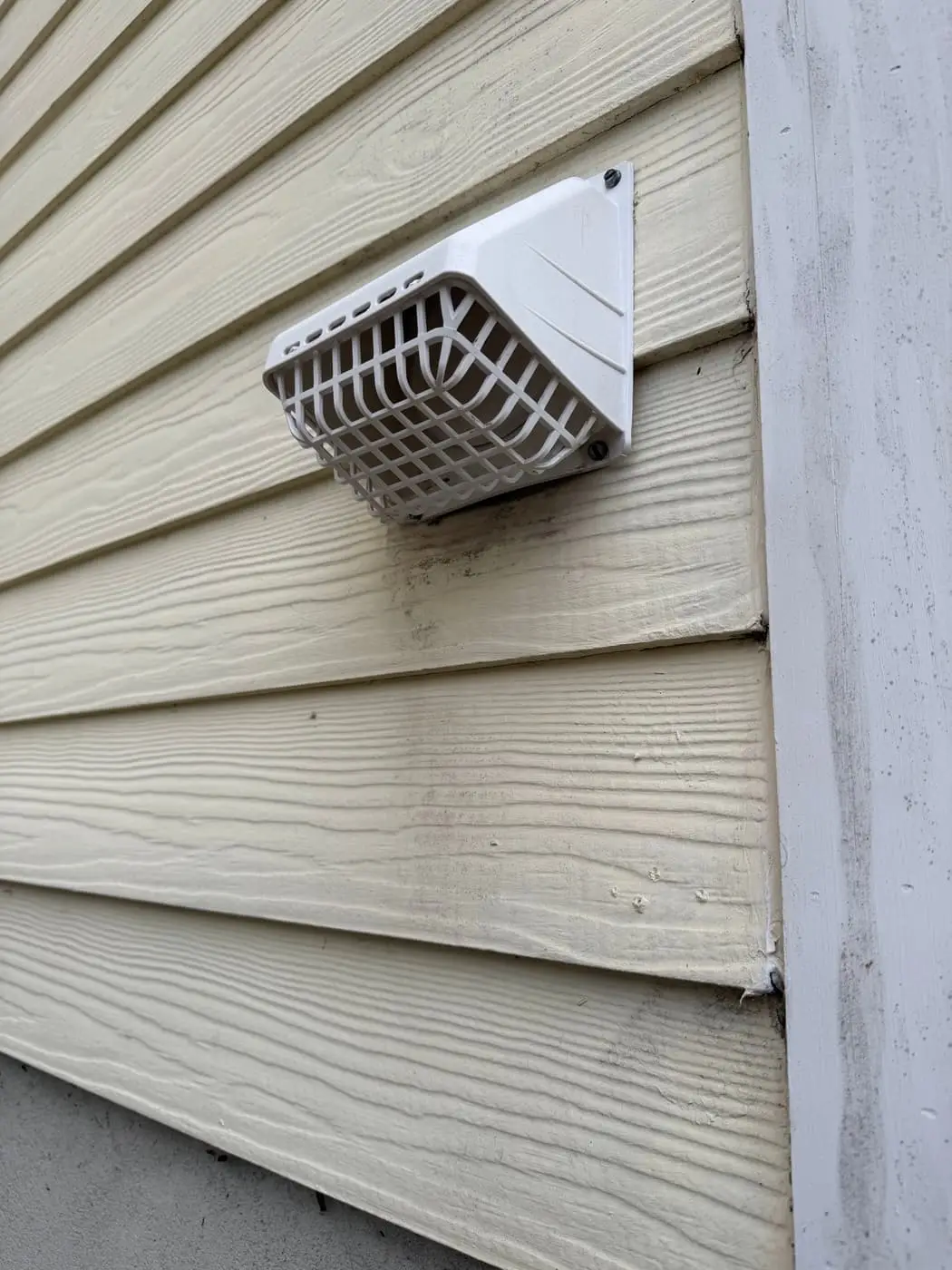
The hood on the outside wall is easy to forget, often above head height and out of view. Its flap should swing open while the dryer runs and drop shut when it stops, and the code calls for the outlet to sit at least 3 feet from openings such as windows and to keep at least 12.5 square inches open when the flap is up. When the flap no longer closes fully, lint builds up behind it and birds may move in, and a nest in a dryer duct can stop the airflow entirely.
Reviews from our Google listing
A selection of our 5-star reviews on Google.
Polishing the ceramic glass and unblocking the air-wash intake passages turned our heavily used woodstove back into an effective heat source.
Static-cling barriers locked the aperture tight, so that high soot agitation inside the top flue never wandered into the next-door kitchen.
The entire sweep was completed with engineering precision and purity never before witnessed from meticulous pre-setup to HD inside camera feature.
Dryer vent cleaning questions
How often should a dryer vent be cleaned?
It depends on the length and shape of the run and how much laundry you do. A short, straight duct can go a long time, while a long run with several bends fills up faster.
Can you do it on the same visit as a chimney sweep?
Yes. Many customers book both together, and we handle them in one visit.
Do I need a permit to replace a crushed dryer duct?
Usually not for a like-for-like repair. If a dryer change also changes the fuel, the pipe size, the location or the wiring, ask your town's construction office, because that can turn it into permit work.
Our condo dryer vent is very long. Is that a problem?
Not automatically, but it needs cleaning more often. Every bend and rise collects lint, and the code limit counts each elbow against the 35 feet allowed.