
How Often to Sweep a Chimney, by Fuel and Use
Wood, gas logs and oil-fired flues foul at different rates, so a single number was never going to answer this honestly. Here is how sweeping frequency actually splits by fuel, by how hard the flue works, and by what NFPA 211 does and doesn't require.
The short answer
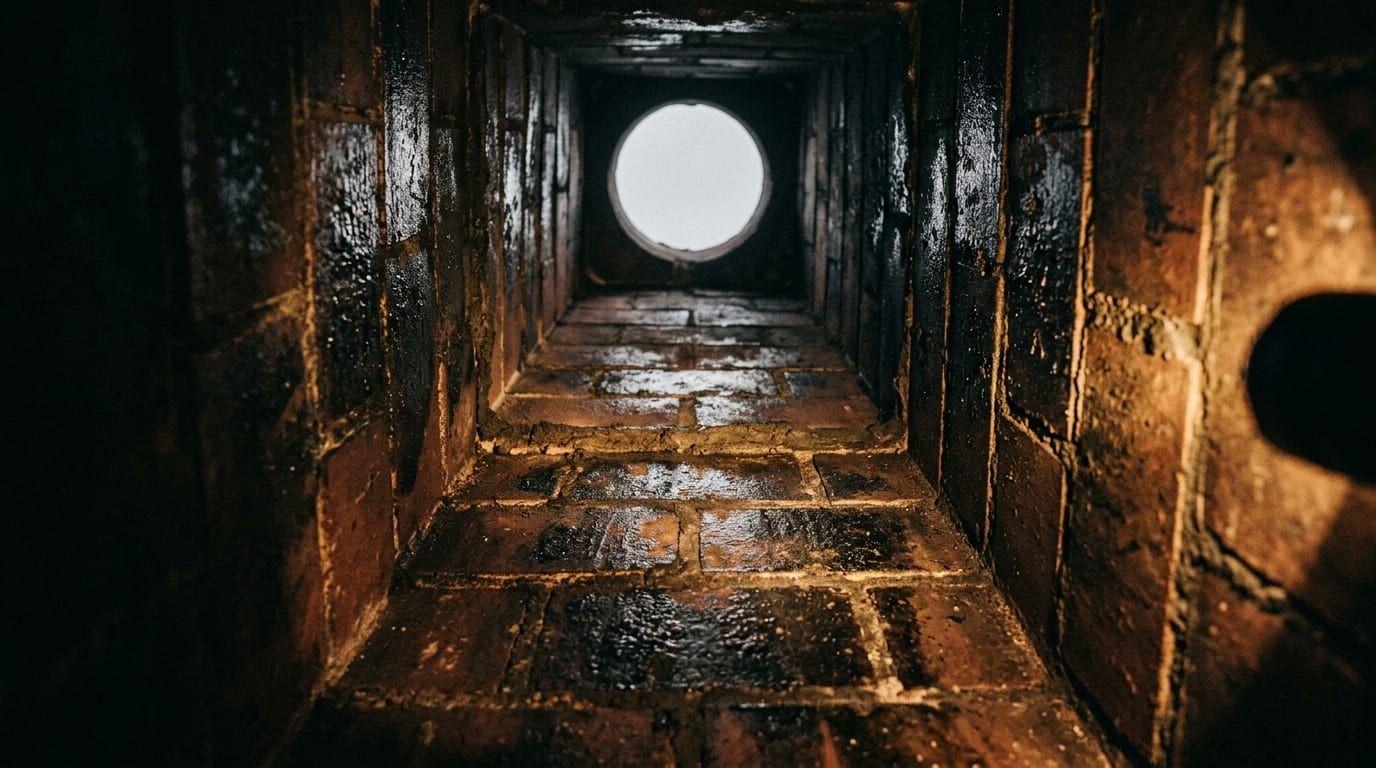
There isn't one number that fits every flue. The baseline, drawn from the industry safety standard NFPA 211, is an inspection at least once a year no matter what fuel burns underneath. From there, actual sweeping frequency splits by fuel: a wood-burning fireplace or stove is the one that can need cleaning more than once in a single heating season, a vented gas log set rarely needs the brush at all but still needs that yearly look, and an oil-fired heating flue is typically cleaned on the same annual cycle as the burner service.
Wood is the fuel that actually wears out a schedule
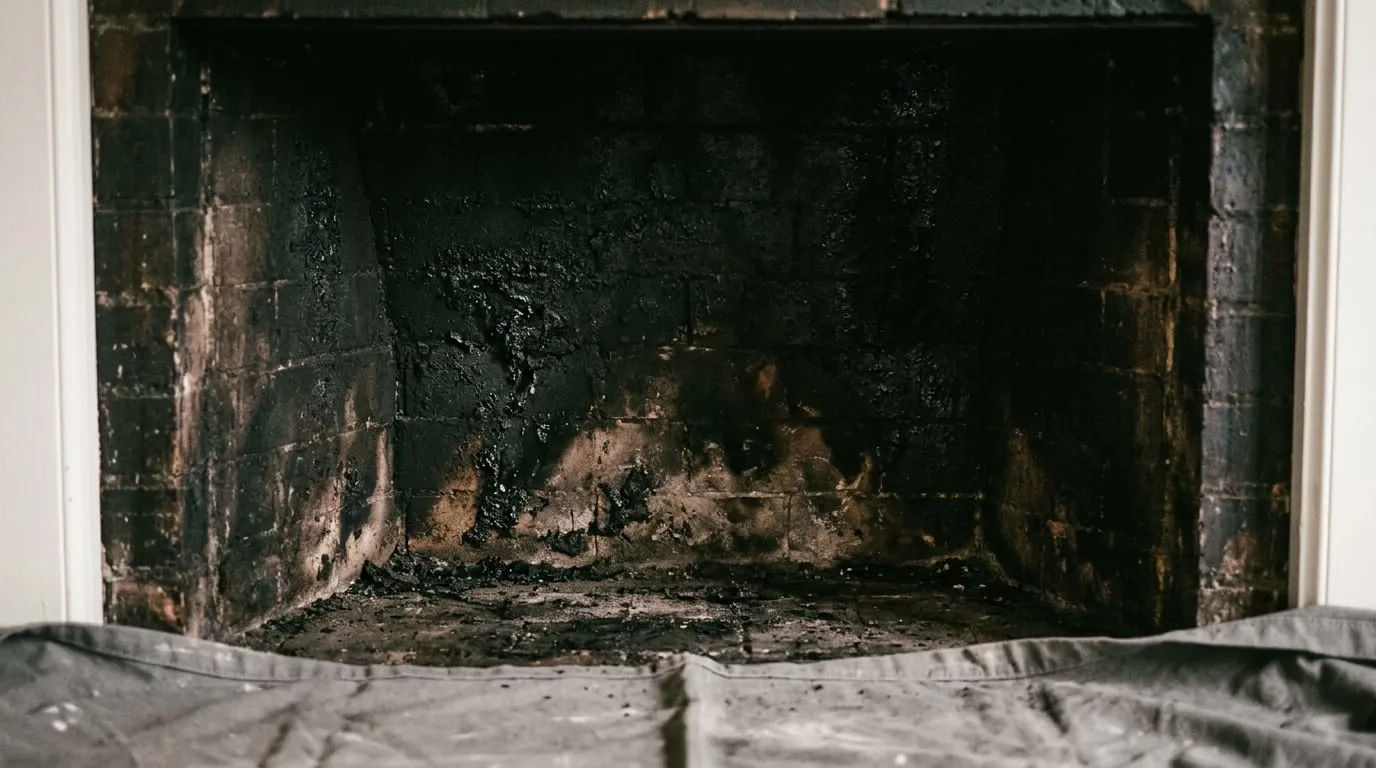
Burning wood is the one habit that can turn 'once a year' into 'twice, easily.' A fire that burns cool or smoky — unseasoned wood, a damper choked down too far, a firebox loaded to smolder overnight instead of burn — sends more of its smoke back onto the flue wall as creosote rather than out the top. A household running a fire most nights through a long winter can glaze a liner faster than a household that lights the fireplace four times a season for the look of it, even though both would call themselves 'wood burners' on the same form. Cordwood volume, moisture content and how hot the fire actually runs matter more than the date on the calendar.
- Unseasoned or 'green' wood burns cooler and leaves more creosote behind per fire
- A stove damped down for an overnight burn smolders rather than combusts fully
- A fireplace lit once a month is not on the same schedule as a stove run nightly
Gas logs skip the soot, not the yearly check
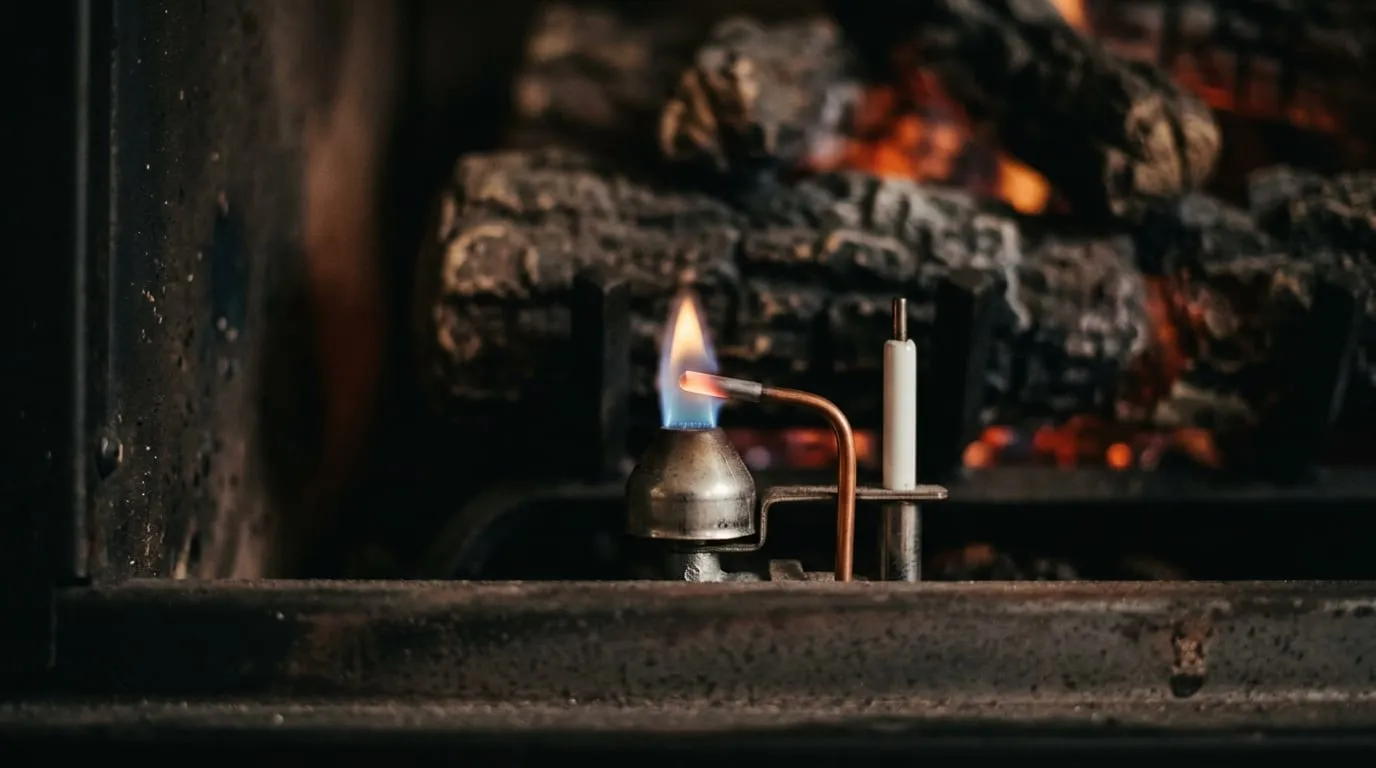
A vented gas log set burns clean enough that a flue can go years without visible soot, which is exactly why gas fireplaces are the ones most likely to get skipped altogether. NFPA 211 doesn't carve out an exception by fuel type: every chimney, fireplace and vent covered by the standard gets the same yearly look, gas included, with cleaning done afterward only if that visit turns up a reason for it. What the check is actually looking for is different from a wood inspection: a damper left shut on a system that assumes it's open, debris or a nest sitting in a flue nobody uses for heat, corrosion on a metal liner from years of moisture in the flue gas, or a log set that has drifted out of the position it was set in.
Oil runs on the burner's schedule, not a separate one
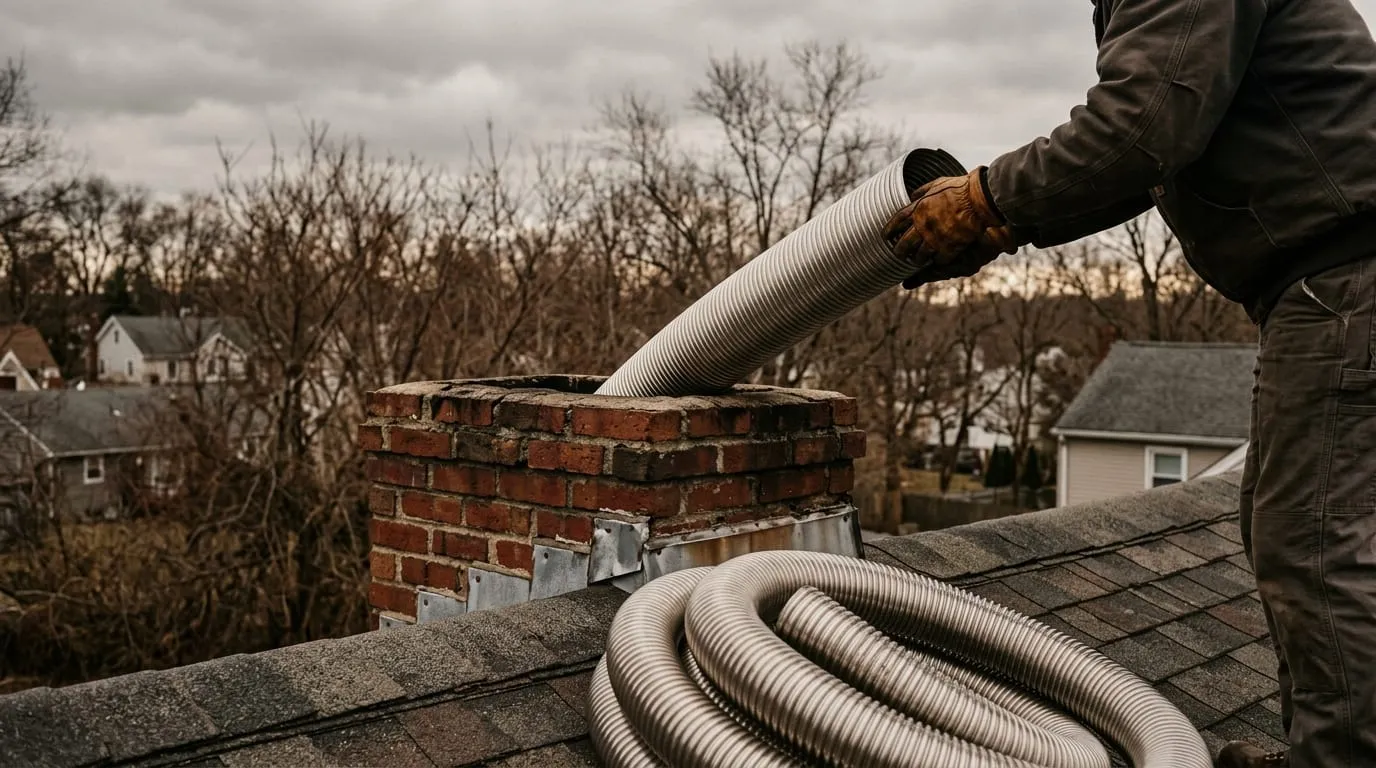
An oil-fired furnace or boiler is serviced annually almost everywhere one is still installed — most service contracts and insurers expect it — and the flue is the natural thing to check at that same visit, because oil fouls differently from either wood or gas. It leaves an acidic, glazed residue on the liner rather than the flaky tar wood produces, and that residue works at unlined or undersized masonry in a way gas condensate does not. In Cherry Hill Township itself only 617 households, about 2.1 percent, still heat with oil against 23,961 on utility gas, so an oil-fired flue here is more often an older system than a new one — one more reason the liner gets checked alongside the burner rather than on a calendar of its own.
What actually moves the number up or down
Sweeps talk about creosote in stages, and the trade's own rule of thumb — not a figure written into any code — is to schedule a cleaning once it reaches roughly an eighth of an inch of glossy or flaky buildup on the flue wall. That is a practice guideline built from what is actually safe to leave in place, not a legal minimum anyone can cite. What pushes a household past that point faster than a year: how many fires actually get lit, how hot they burn, whether the wood was properly seasoned, and whether the appliance is a tight, efficient stove or an open masonry fireplace pulling in more air than it needs to. If a room still smells faintly like a campfire days after the last fire went cold, that is usually the creosote talking before anyone has looked at the flue with a light.
- An eighth of an inch of glossy creosote is the trade's practical cleaning trigger, not a code figure
- An airtight stove run efficiently deposits less creosote per fire than an open fireplace does
- One heavy-use winter can call for a mid-season sweep even on an otherwise annual schedule
What this looks like across Cherry Hill Township
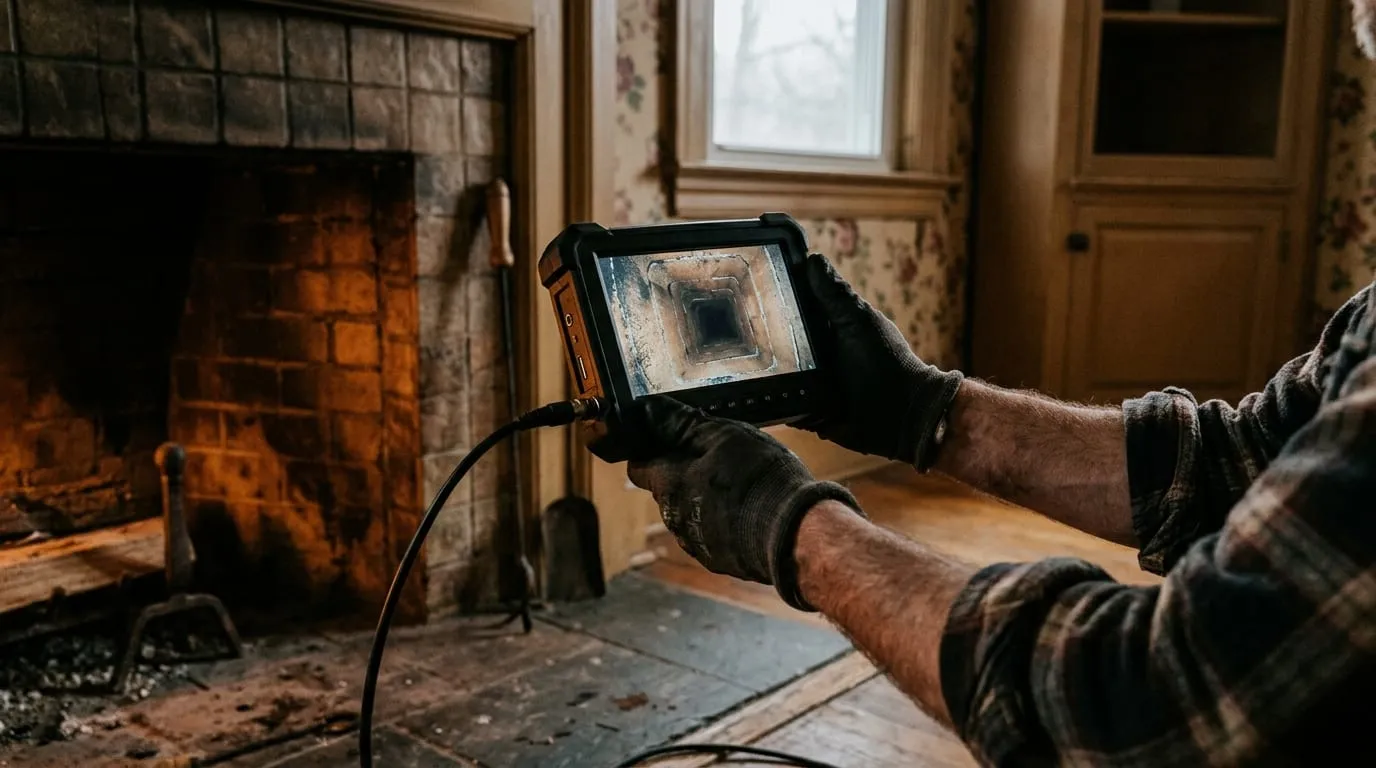
Cherry Hill Township's own housing mix tilts this question a particular way: 81.3 percent of occupied homes here heat with utility gas, and only about 157 households — 0.5 percent — report wood as a primary heating fuel. That second number is a floor, not the whole picture: it only counts wood used as the main source of heat, so it says nothing about the much larger number of gas-heated houses that also keep a wood-burning fireplace going three or four nights a winter. Those are exactly the fireplaces most likely to sit unswept for years, because nothing about them looks urgent from the living room. A camera down the flue settles the question either way, rather than guessing from how the fire looks from the hearth rug.
Questions people ask about sweep frequency
How often should a wood-burning fireplace be swept?
At least once a year under NFPA 211, and more often for a household that burns regularly through the winter. A fireplace lit three or four times a season and a stove run nightly are not on the same schedule even though both burn the same fuel.
Do gas fireplaces need to be swept if there's no visible soot?
They still need the same annual inspection as any other flue. A gas log set produces very little visible soot, but the inspection is checking the damper, the liner and the venting path, not just looking for buildup on the wall.
Is an oil-fired flue cleaned separately from the burner service?
Usually not. Most oil systems get the flue checked at the same annual visit as the burner tune-up, since oil residue and burner performance are tied to the same appliance.
What is the eighth-of-an-inch creosote rule?
It's a trade rule of thumb, not a number set by any code. Many sweeps use roughly an eighth of an inch of glossy or flaky creosote on the flue wall as the point to schedule a cleaning.
Does a fireplace that is barely used still need a yearly check?
Yes. An inspection at least once a year applies regardless of how often the appliance is actually lit — an unused flue can still take on debris, lose a cap, or crack in a way that has nothing to do with how much it has been burned.
Want somebody to look at yours?
Describe what your fireplace or flue is actually doing and we'll tell you whether that calls for a sweep, an inspection, or something more. The phone gets picked up 7:00 AM to 9:00 PM, every day.
The services this is about
Chimney Inspection
A Level 1 checks what's already visible; a Level 2 runs a camera down the full flue and puts every finding in a written report — the version New Jersey's 2024 IRC expects before a sale, a claim, or a change of fuel.
Read moreChimney Sweeping
The camera goes down before any brush does, so cleaning starts once the flue's actual condition is visible rather than guessed at — every reachable run swept and vacuumed rather than pushed loose into the room.
Read more